Audrey Hobert Dares to Ask: Who’s the Clown (Album Review)
August 19, 2025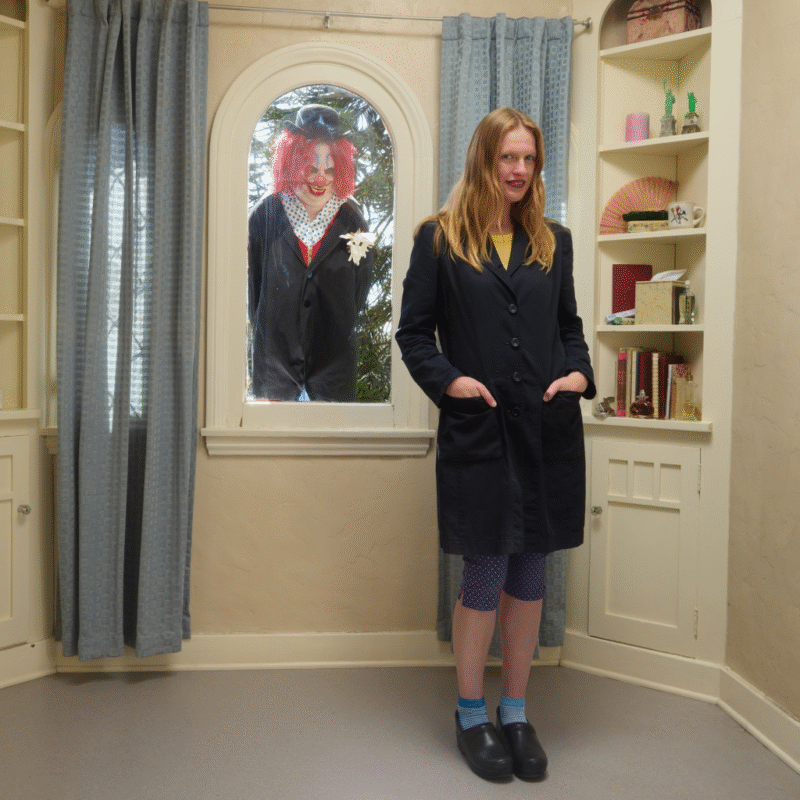
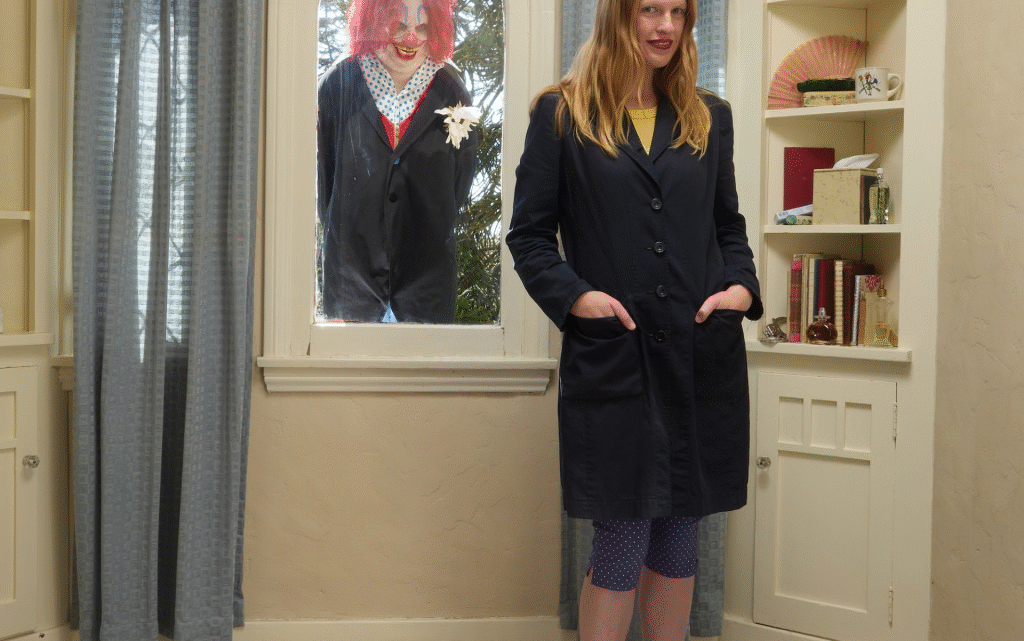
Everyone remembers the chaos of their twenties—the giddy freedom, the self-doubt, the heartbreak, and the dizzying joy. Few capture that cocktail better than Audrey Hobert on her debut album Who’s the Clown, released August 15, 2025 under her label Universal Music Group.
A close friend and collaborator of singer-songwriter Gracie Abrams, Hobert first won fans with her lanky, offbeat stage presence and disarming honesty during Abrams’ live shows,
Photo: Lenne Chai/Sony Music
where she co-wrote and performed songs like “I Love You, I’m Sorry” and “That’s So True.” Their chemistry spilled into viral clips, but Hobert’s lyrical fingerprints stood out: playful on the surface, with an emotional sting just beneath.
That duality—quirky and charming, but deeply vulnerable—runs through Who’s the Clown. At its core, the album is a lonely night with wine, where bedroom-pop confessions are dressed up in addictive hooks and bridges begging for repeat spins. The title sets the tone: Hobert leans into humor and self-deprecation, but the clown mask slips often, revealing raw moments of longing and self-doubt. It’s no surprise this blend found her a loyal TikTok following, where upbeat pop beats meet lyrics that feel like unfiltered overthinking.
Musically, the album toggles between quick snare patterns, groovy bass lines, and layered vocals, building a sonic palette both polished and intimate. Lyrically, Hobert’s voice is startlingly direct—she can pivot from biting wit to gut-punch vulnerability in a single verse, making the record feel like a late-night conversation with a friend who won’t sugarcoat.
The opener, “I Like to Touch People,” sets the stage with Hobert’s signature mix of mischief and sincerity. She daydreams about being asked what she likes to do, and her tongue-in-cheek reply—“I like to touch people”—doubles as both a joke and a manifesto. One verse hints at the thrill of physical closeness, while the next shrugs off reciprocity: she just wants to stir something in others, not necessarily be touched the same way back. A saxophone outro closes the track with unexpected flair, announcing Hobert as equal parts kitschy and heartfelt.
Her breakout single, “Sue Me,” cemented Hobert’s place in the modern pop canon, quickly taking over TikTok and dividing listeners. The too-cool-for-school crowd scoffed—“I am not falling for this propaganda”—while pop lovers demanded, “WHERE’S THE ALBUM?” That tension only amplified Hobert’s appeal. She wants to be wanted—perhaps inherited from her “people-pleasing mother”—but she’s also quick to remind us that “being a saint is exhausting.”
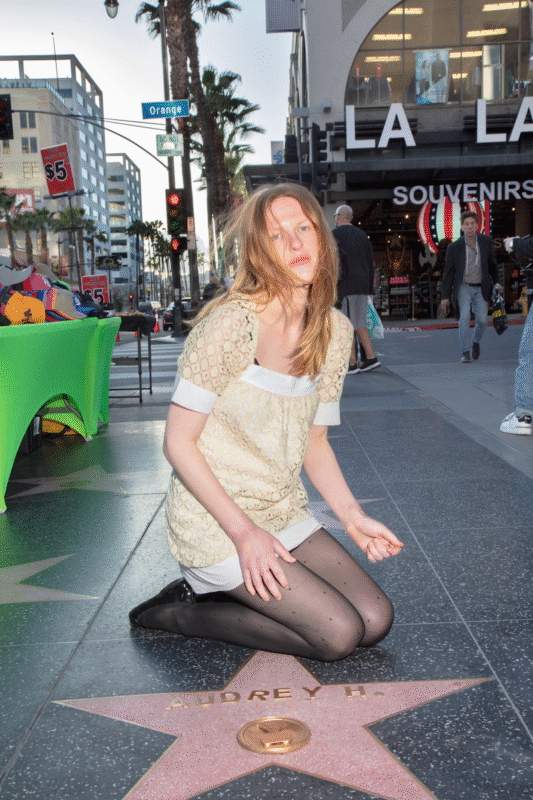
Photo: Kyle Berger/Sony Music
What makes Hobert more than a viral moment, though, is what comes next. “Bowling Alley” follows not as a comedown but as a revelation: tender, reflective, and quietly devastating. Where “Sue Me” thrives on spectacle, “Bowling Alley” is all intimacy, narrating the push and pull of her twenties with lines that ricochet between confidence and overthinking. One moment she’s basking in the glow of a strike—“Everyone loves a winner, but who’s gonna tell ’em I’m a lucky beginner?”—the next she’s miles away, remembering a candle left burning at home. That simultaneous presence and absence, wanting to be wanted while resisting the need for constant attention, anchors the song’s ache.
The balance tips again with “Thirst Trap,” a hilarious return to Hobert’s clown persona. Over a bouncing beat, she lampoons her own craving for validation—“lame, such a shame, I used to be super cool”—while waiting for a text back and staging mirror selfies for an audience of one. By the time she jokes about holding off on replying until she’s in the shower, Hobert has turned pop’s most familiar themes—desire, insecurity, self-mythologizing—into something that feels both deeply personal and universally chaotic.
Hobert’s twenties may be the lens of Who’s the Clown, but traces of adolescence and anxieties about adulthood loom large. “Sex and the City” laments her lack of resemblance to the early-2000s cultural phenomenon (not the only 2000s references on this album, with “Phoebe” calling back to Friends), swapping cosmopolitan glamor for writing alone in her room. She shrugs through a situationship with a man who doesn’t even own a headboard, then shares a more heartfelt exchange with her Uber driver on the ride home. That tension—between intimacy and indifference, presence and absence—runs throughout her storytelling.
We return to people-pleasing Hobert on “Shooting Star.” Here she spins a fantastical tale about a toxic entanglement, defending it to her friends with lines like “he treats me like shit but baby I promise it’s worth it.” Over dreamy synths and crisp percussion, she shapes her messy reality into a narrative arc that almost convinces her audience—and herself. When her friends insist “that’s not a shooting star,” Hobert tumbles back to earth, reminding us that the clown act always ends with a pratfall.
“Silver Jubilee” feels like the album’s epilogue, tying the whole project together with a rock-leaning edge—driving percussion and electric keys that nudge Hobert out of bedroom-pop and into something bolder. Lyrically, it distills her contradictions: “I’ma fall in love just to find out they paid you” lands with equal parts sting and smirk, while “I’ma tell my sister your secrets” feels bratty and intimate, as if Hobert is writing directly to her inner circle rather than a faceless audience. That specificity is her magic—she lets listeners feel like they’re overhearing a conversation meant for someone else. When she shrugs, “I don’t really party, I just sit at home, but for the sake of the story, I’ll throw it back to the chorus,” Hobert reveals the album’s mission in miniature: every song is half-confession, half-performance, messy and mythic all at once.
Hobert’s persona is both magnetic and refreshing. While her connection to Gracie Abrams opened doors, Who’s the Clown makes it clear she’s ready to stand on her own. If Abrams perfects the hushed confession, Hobert thrives in contrast—unafraid to be messy, funny, and brutally sincere. She echoes artists like Regina Spektor, Clairo, or early Taylor Swift, who wield wit and vulnerability in equal measure. More importantly, she speaks directly to a Gen Z audience fluent in irony and intimacy, where a joke is rarely just a joke.
Who’s the Clown is more than a debut—it’s a mission statement. Hobert proves she can balance humor with heartbreak, mask with revelation, and in doing so, capture what it feels like to stumble through your twenties with wide eyes and a crooked grin. She nods to pop’s past while carving a lane uniquely her own.
By the album’s end, the clown isn’t just Hobert—it’s all of us, fumbling through love and loss, laughing so we don’t cry. And that’s what makes this record sting in the best way: beneath the punchlines, Hobert is dead serious.