Seasonal Playlist: A Winter Drifts
April 1, 2026The DenverThread mega-playlist for a long, strange season
Curated by Billy Thieme and Shannon Long of DenverThread
In Denver this year, winter didn’t feel much like winter.
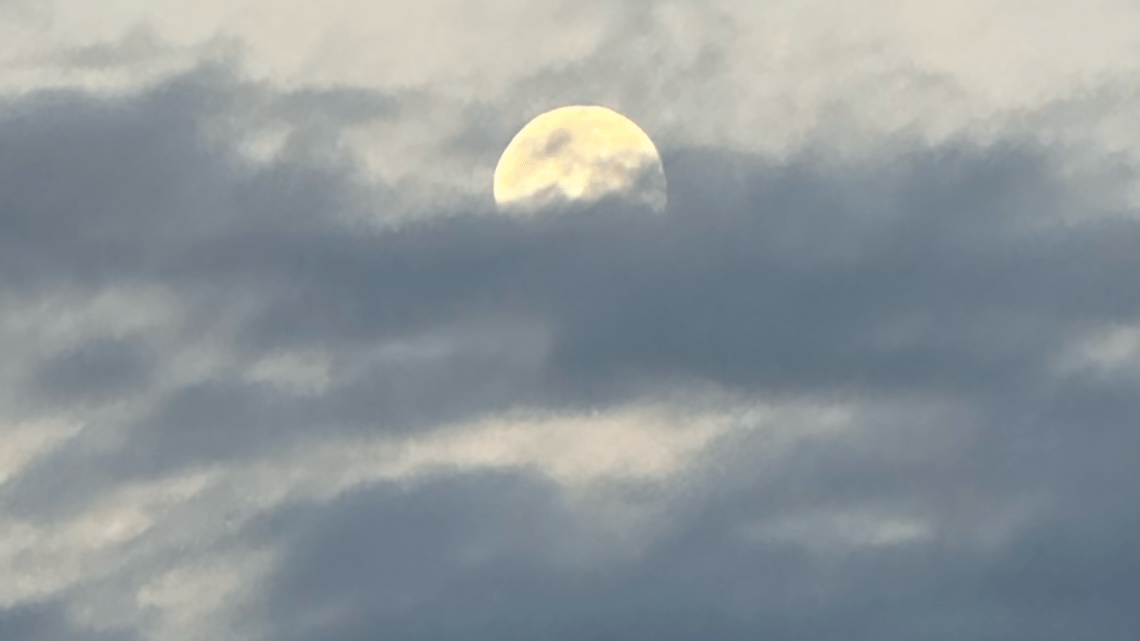
It’s late March and the city has seen barely a trace of snow. Several days have climbed comfortably into the 70s and higher. Jackets remain unused, hanging in hallway closets, and boots sit clean as whistles on mudroom benches. The mountains, from a distance, seem to barely hold their seasonal rhythm—but in the city, something feels off. Suspended—like the winter we expected had just been postponed.
It’s the kind of season that throws off your internal compass. You expect cold. You expect snow. Instead, you get something warmer—but not quite fall. Not quite anything. Just… strange. And in times like these, music becomes one of the few things that can restore a sense of orientation.
This season’s DenverThread playlist—A Winter Drifts—was curated inside that strangeness. Not just a collection of winter-themed songs—something closer to a document of this moment, a reflection of a season defined not only by unusual weather, but by a heightened sense of tension, uncertainty, and—at times—unexpected hope.
Not gonna lie—it’s a big one. Nearly 200 tracks spanning protest anthems, indie discoveries, hip-hop, folk traditions, winter imagery, electronic textures, and the occasional moment of absurd humor.
It’s long. Intentionally so.
Because like the season that inspired it, the goal isn’t to move straight through from beginning to end. It’s to wander. To let songs accumulate, collide, and reveal connections over time.
Let’s Talk About Drift
Most playlists are built around a simple premise: a mood, a genre, a vibe. A Winter Drifts starts with more fluidity.
A drift can be a snowdrift piling against a fence line. It can be the slow movement of seasons—or the gradual accumulation of cultural moments that eventually define an era.
And it can also describe the way we experience music.
In this post-iPod world (remember them?), most of us now listen in a constant stream—often in shuffle mode. Songs appear out of order, unexpectedly. Sometimes the transitions feel jarring. Other times, they feel almost impossibly perfect. And that’s where synchronicity comes in.
We’ve talked about this before, but for first-time readers: Carl Jung described synchronicity as the experience of events that feel meaningfully connected, even without a clear cause. Music produces this constantly: a lyric landing at exactly the right moment, a song appearing that seems to understand something you hadn’t fully articulated yet.
Shuffle mode creates space for that—and we encourage it—but A Winter Drifts was also built to function another way.
As the playlist evolved, it revealed a deeper structure—something closer to a long-form narrative. Not just a collection, but a progression.
What follows is a series of movements tracing the emotional arc of this strange winter: from disorientation to confrontation, reflection, resistance, endurance—and eventually toward something quieter, stranger, and maybe even hopeful.
Because in many ways, the playlist depends on it.
Listen to the full playlist on Apple Music and Spotify, and explore the full narrative behind each movement.
Listen to A Winter Drifts on Apple Music:
Listen on Spotify:
Prologue: False Winter
Songs 1 – 23
The playlist opens in a place of subtle unease. Contemporary indie and alternative voices—Wet Leg, Mitski, English Teacher, Alex G—set the tone. There’s humor here, but it’s uneasy. Observational. Slightly off-center.
These are songs that don’t quite land on stable ground. They ask quiet questions: What just happened? Where are we? Why does everything feel slightly out of alignment? It mirrors the weather outside in a way that’s hard to ignore.
A winter that doesn’t behave like winter leaves you unmoored. And sometimes, the only response is to observe—to sit with the disorientation long enough to recognize that something deeper’s likely shifting.
Act I: The Weight of History
Songs 24 – 46
If the playlist has a center of gravity, this is its first gravitational wave.
Here, A Winter Drifts draws from a lineage of protest music that stretches across nearly a century. These songs serve as both reminder and warning: cultural tension, conflict, and upheaval are not new. They’ve always felt overwhelming in the moment, and it seems they always will.
Billie Holiday’s “Strange Fruit” opens the section—still one of the most haunting recordings in American music. From there, the thread runs through Woody Guthrie, Pete Seeger, Bob Dylan, and beyond. These are songs of witness.
Later voices—Public Enemy, Gil Scott-Heron, Kendrick Lamar, Childish Gambino—extend that lineage across genres and generations. The message evolves, but the urgency remains. Together, these tracks create a sense of continuity.
Each generation believes its moment is unprecedented—but is it? Whether or not that’s true, the movement feels no less overwhelming.
Act II: Lookin’ in the Mirror
Songs 47 – 75
From history, the focus narrows. This section turns inward—toward America, identity, and accountability.
The figure of Tom Joad runs through this act, like a haunted spine. From Guthrie to Springsteen to Rage Against the Machine, Joad fulfills his universal symbolism—of inequality, displacement, and moral reckoning.
Surrounding those songs are more direct, contemporary voices—tracks that confront systems, structures, and lived realities head-on. This is where the playlist starts to become more confrontational—not offering answers—forcing recognition.
Act III: Metaphor for Winter
Songs 76 – 98
After the intensity of protest and confrontation, the playlist drifts into quieter terrain.
Here, winter becomes a metaphor. Songs like “Winter” by The Rolling Stones, “Winter Song” by Screaming Trees, and “Fifteen Feet of Pure White Snow” by Nick Cave explore cold, stillness, and isolation—not just as physical states, but emotional ones.
Winter has always carried symbolic weight: reflection, pause, even death—and the necessary stillness before renewal. In a strange season where winter itself felt uncertain, these songs take on added resonance. And moments of absurdity—like Zappa’s “Don’t Eat the Yellow Snow”—serve a purpose. A reminder that even in the coldest stretches, there’s room for humor.
Act IV: Defiant Joy
Songs 99 – 121
Then, a shift. Energy returns. Rhythm returns. Movement returns. Hip-hop, punk, indie rock—these songs bring momentum back into the playlist—not escapism, but resistance.
Joy, here, is not naive—it’s deliberate, a refusal to be flattened by the weight of everything that came before.
Act V: Digging In
Songs 122 – 142
After that surge of energy, the playlist settles again. Digging In is about endurance. Not loud protest. Not explosive joy—quieter, more rooted. These songs feel grounded—like they’re built to last—reflecting a different kind of strength: persistence, resilience.
It’s the understanding that change doesn’t always arrive in waves. Sometimes it comes through simply continuing—day after day, note after note, after note.
Act VI: Approaching Solstice
Songs 143 – 170
Gradually, something shifts. This section feels transitional. Not resolution, but movement toward it. The tension hasn’t disappeared—just loosened a bit. There’s a sense that something is changing beneath the surface, even if it hasn’t fully revealed itself. Like the days just before the solstice, when longer periods of light begin to return, sort of imperceptibly.
Act VII: Re-Creation Soundtracks
Songs 171 – 186
The final movement before the close explores rebuilding—not a return to what was, but the creation of something new. These songs are curious. Open-ended. Sometimes strange— and they create space. And that space matters.
After disruption, confrontation, and reflection, what usually comes next isn’t certainty—it’s more often than not possibility.
Epilogue: Drifting Out
Songs 187 – 194
The playlist closes not with resolution, but with release. Because we’re not at the end of a story—we’re in the middle of it.
If the earlier sections help us understand where we are, the final moments suggest something else: that we may already be moving toward what comes next—even if we don’t fully recognize it yet.
Listening in the Middle of It
There are a few ways to experience A Winter Drifts. You can follow the narrative—moving through each section as it unfolds. Or you can hit shuffle—inviting synchronicity. Songs from different eras and genres collide in unexpected ways. Sometimes random. Sometimes perfect.
Another suggestion—pick an act and listen. Scroll up to one of the transition tracks at the beginning of each section, and take in the essence of a mini-list. Feel what the tracks are laying down.
All three approaches matter. One offers structure, one invites discovery, and another offers some focus on a single movement.
Whichever way you listen, the songs remain the same: voices from different decades speaking into the same moment.
Drifting Toward the Next Season
As Denver eventually moves toward spring, this playlist will remain a snapshot of this strange winter—a season without much snow, unfolding during a time of cultural tension, uncertainty, and possibility. It’s a reminder that even when things feel unsteady, music can still offer something solid.
A way to listen.
A way to reflect.
A way to imagine what comes next.
Because if history teaches us anything, it’s this: Seasons change. And sometimes, just before they do—the winds begin to drift.