The Hives Detonate the Ogden: A Garage-Rock Revival in Black and White
September 26, 2025Photos: Gerardo Federico
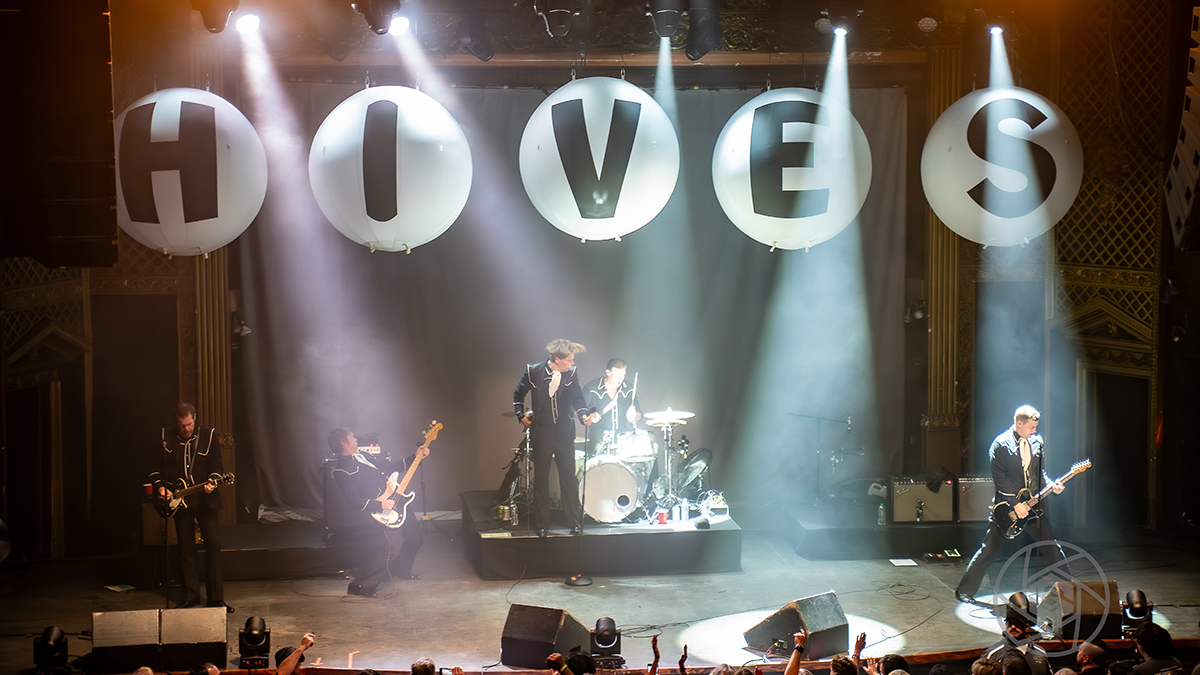
The lights drop, and five figures in crisp black-and-white tuxedos march out like rock ’n’ roll stormtroopers. For a split second, the packed Ogden Theatre holds its breath — and then Howlin’ Pelle Almqvist lets out a scream that splits the air like a starting gun.
The Hives are here.
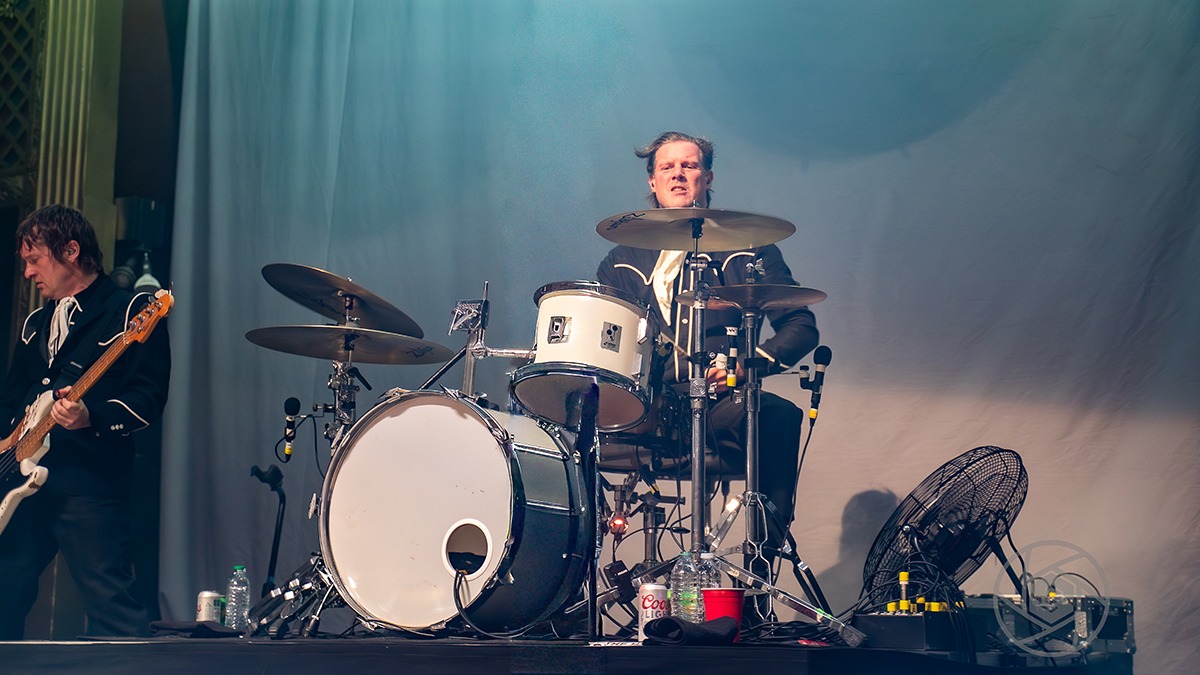

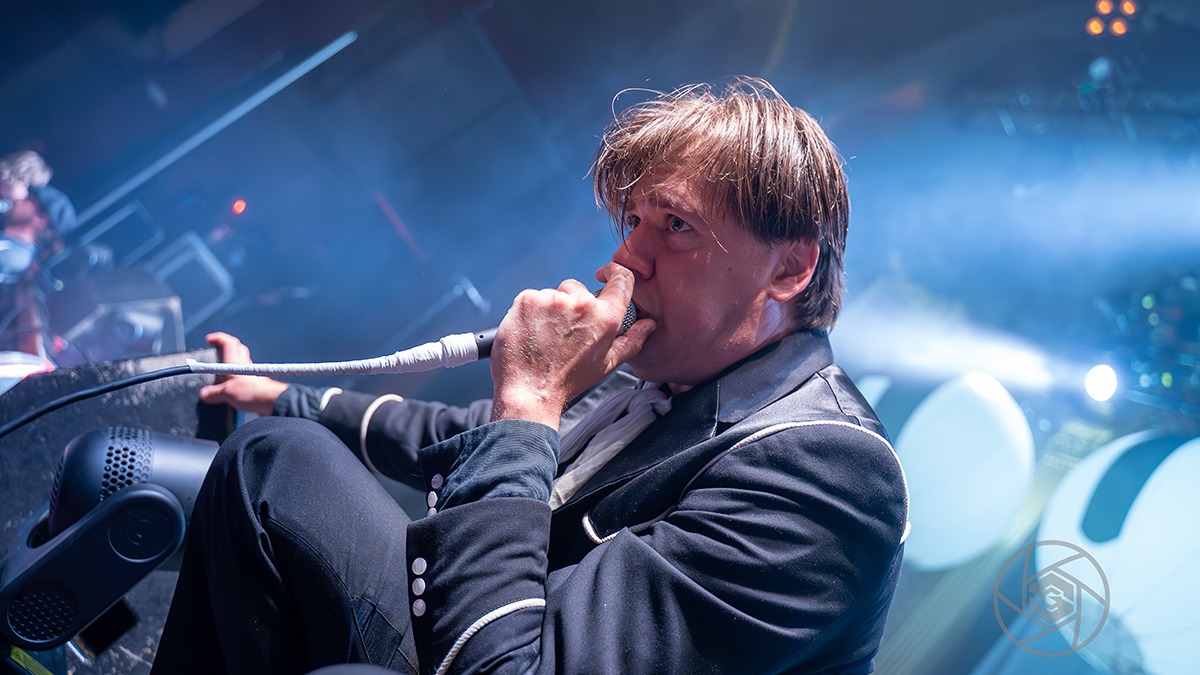
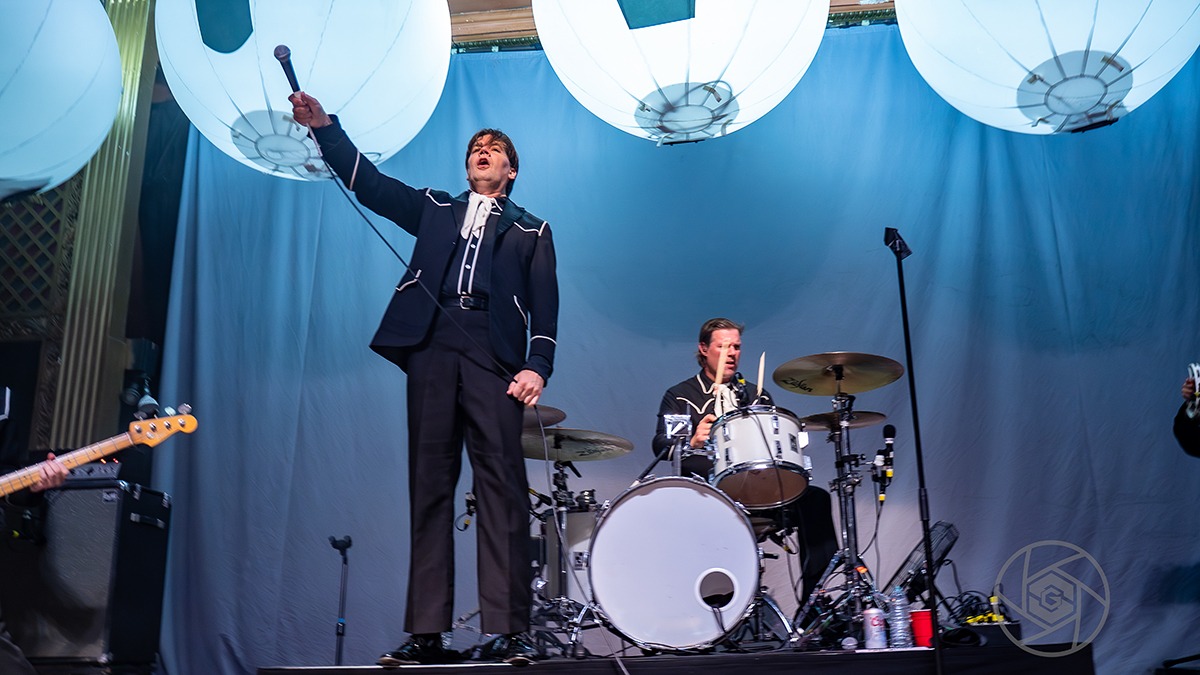
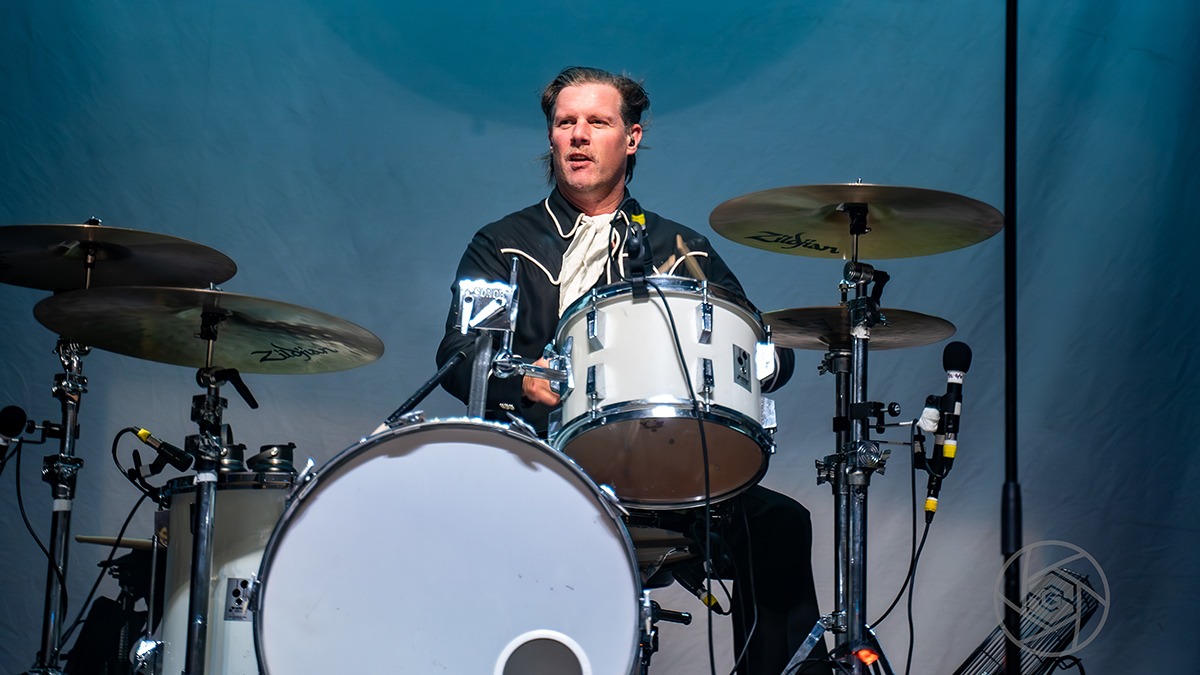
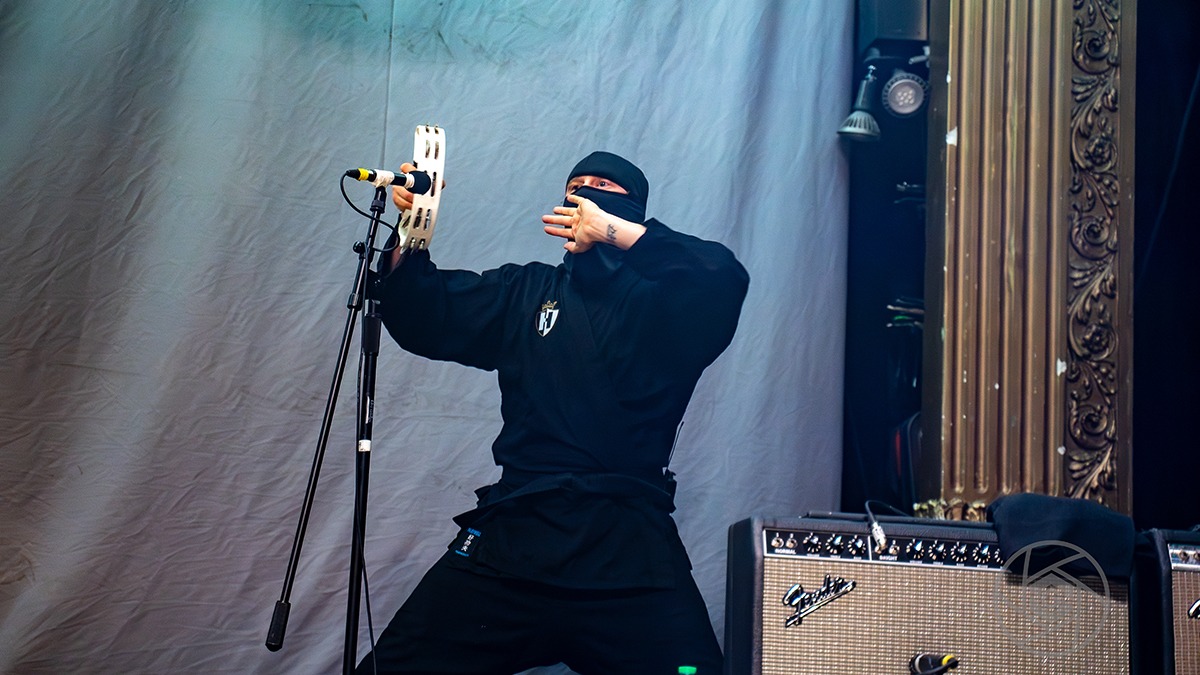
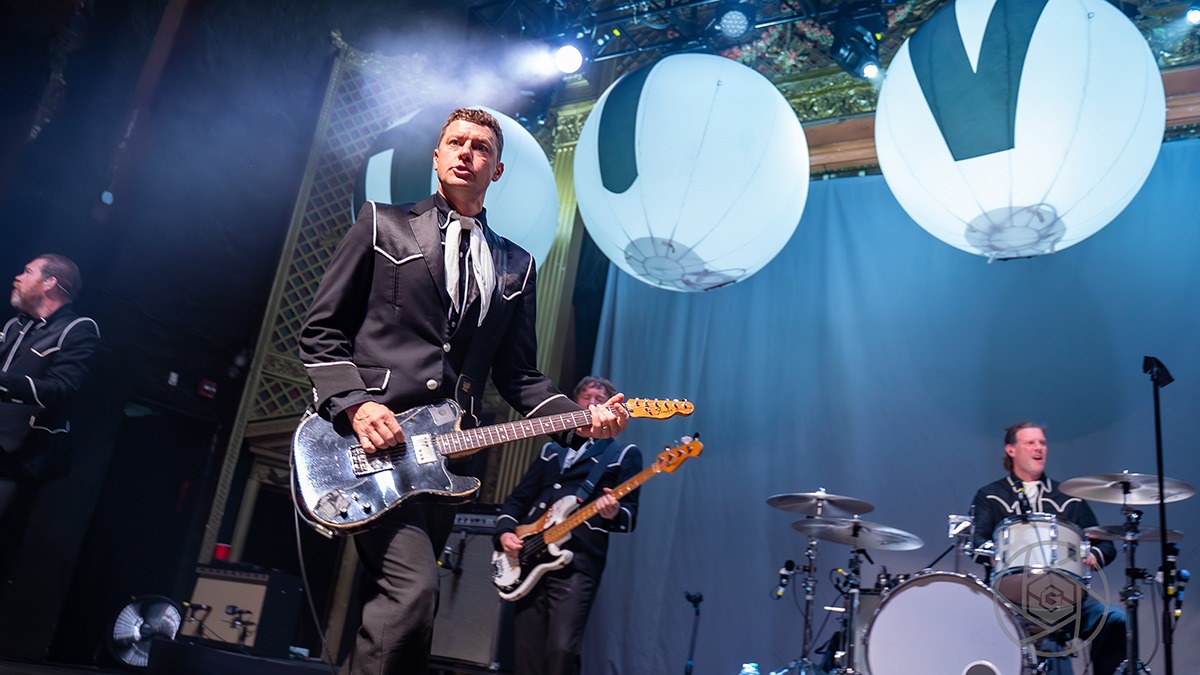


And for the next 90 minutes, Denver’s most historic club becomes a pressure cooker of sweat, swagger, and pure, uncut garage rock.
Electric Anticipation
It’s a warm September night, the kind that already hums with static when you step onto Colfax. The line outside the Ogden snakes down the block, a buzzing crowd of fans wearing leather jackets, vintage tees, and that look of conspiratorial excitement that means everyone knows what’s about to happen. Inside, the place is already pulsing — a dark, sticky floor, lights bouncing off the chandeliers, beer spilling from plastic cups.
When the stage lights finally shift to that stark monochrome glow, the audience roars as if someone flipped a switch from anticipation to combustion.
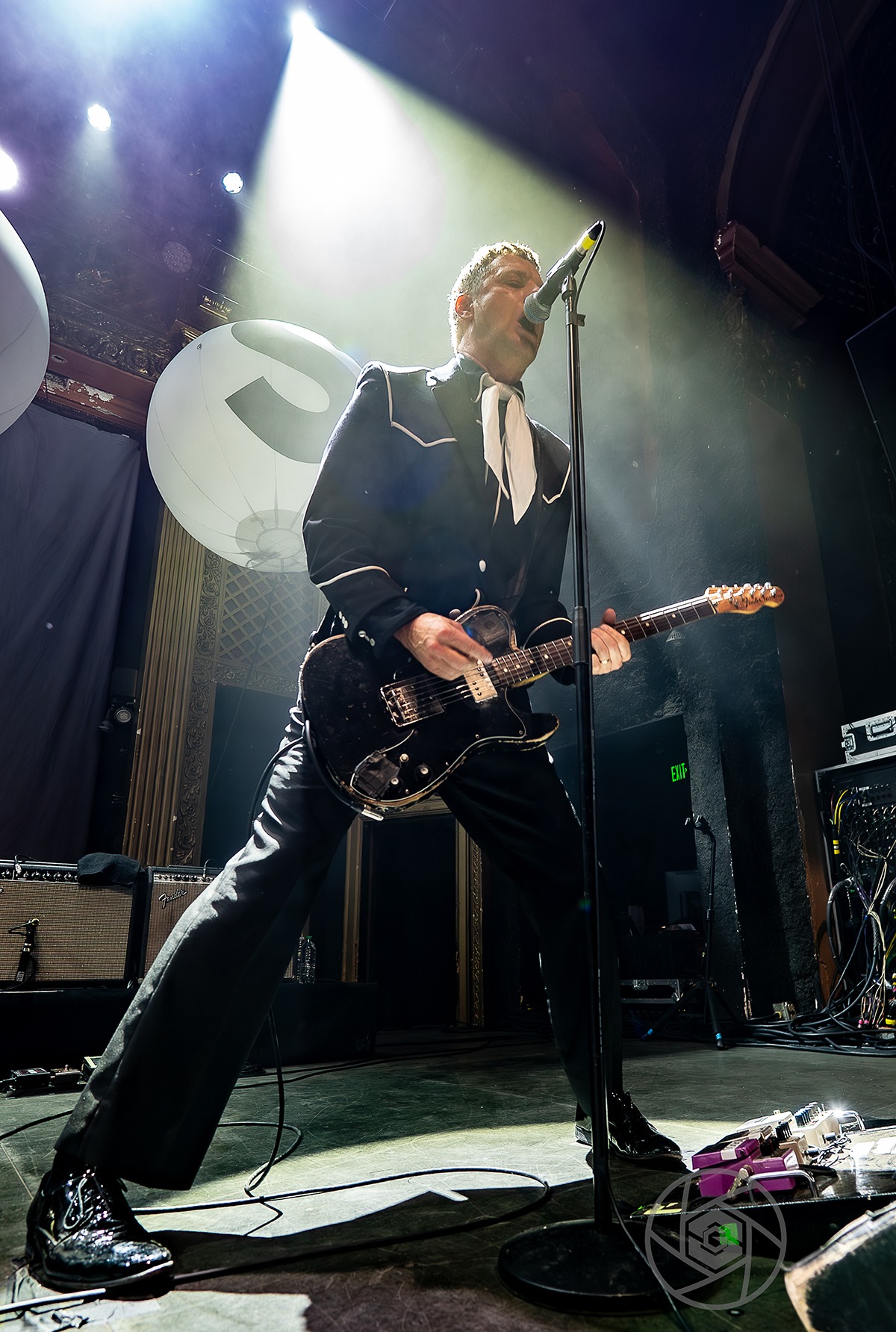
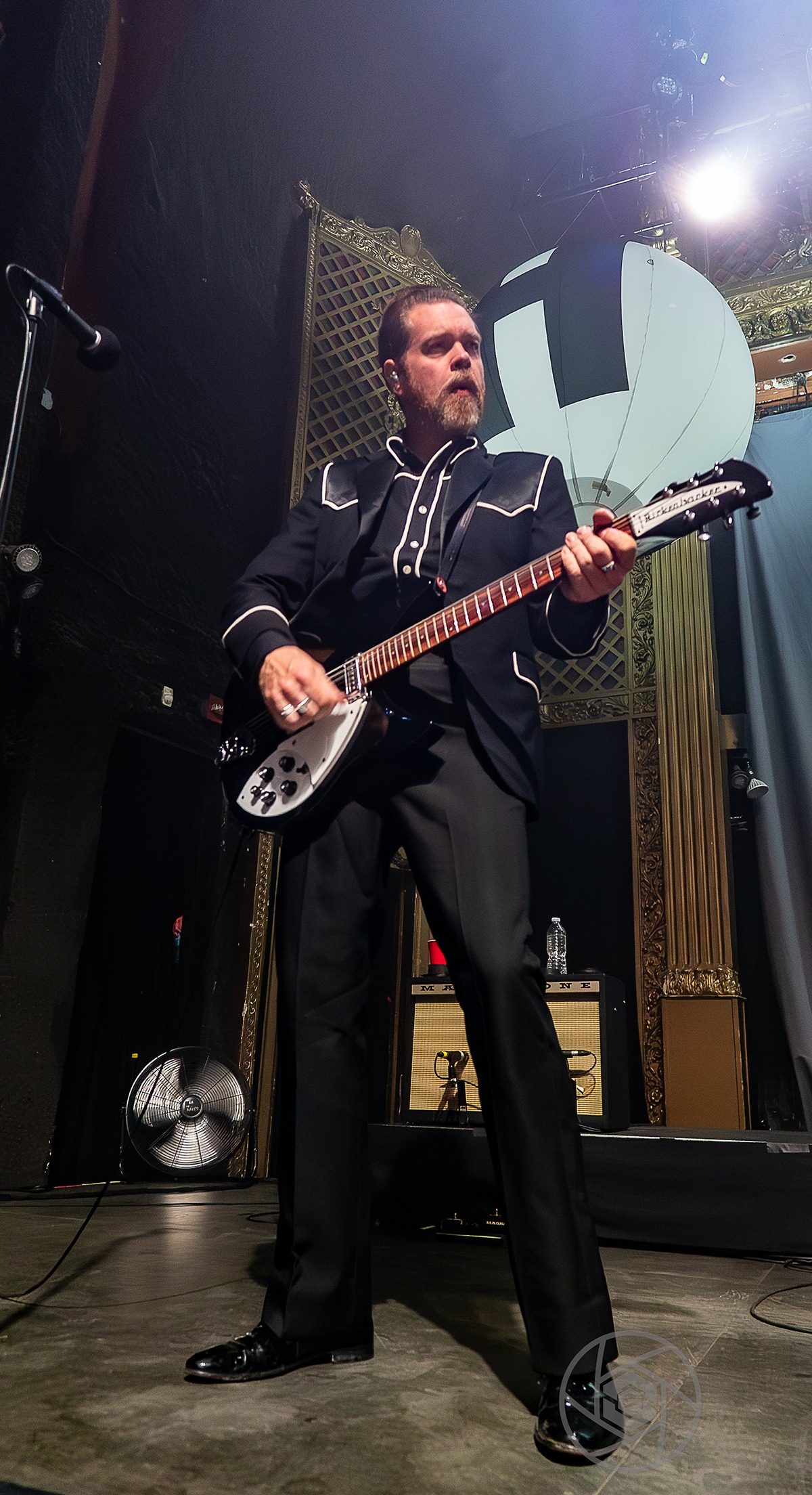
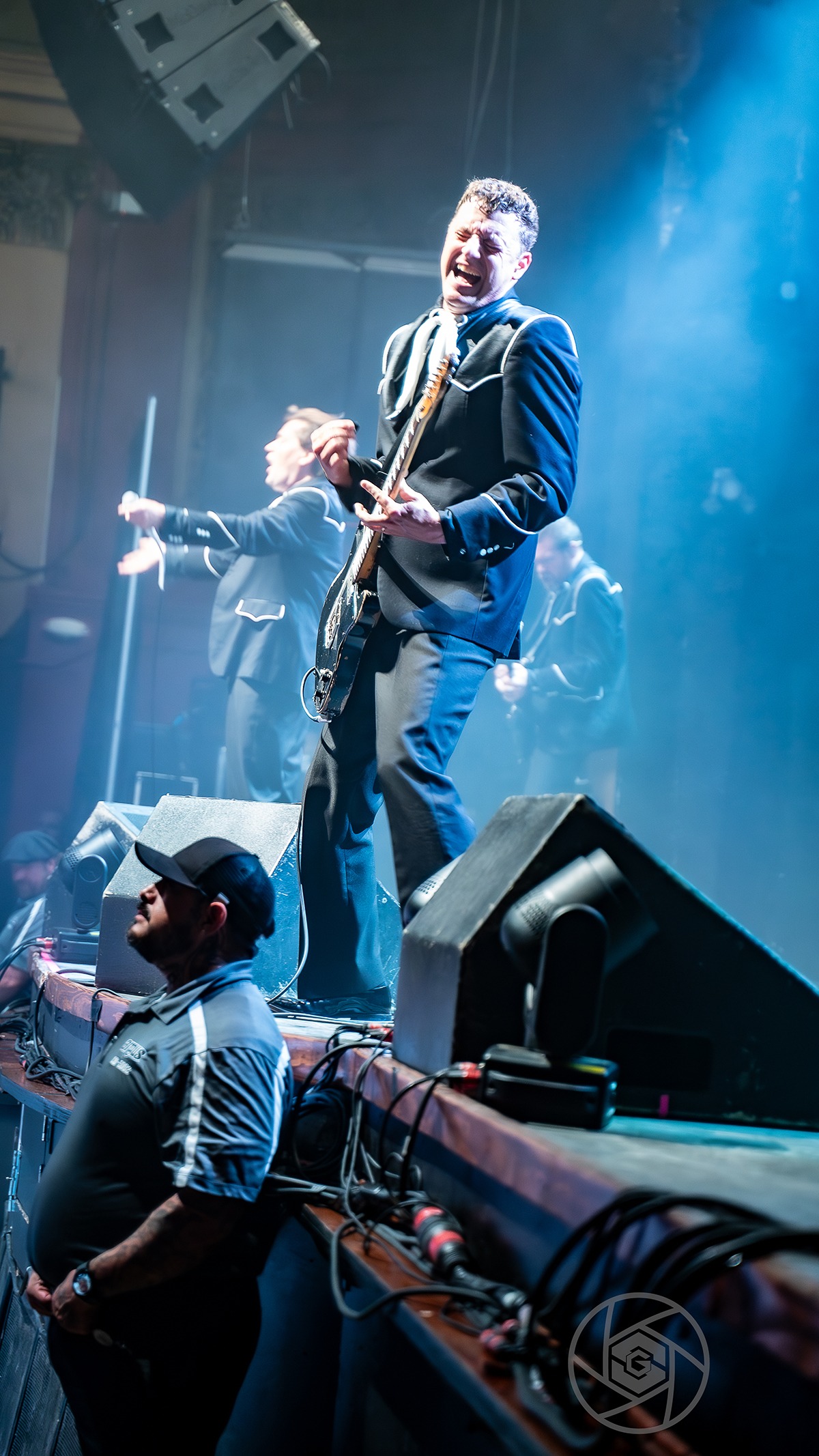
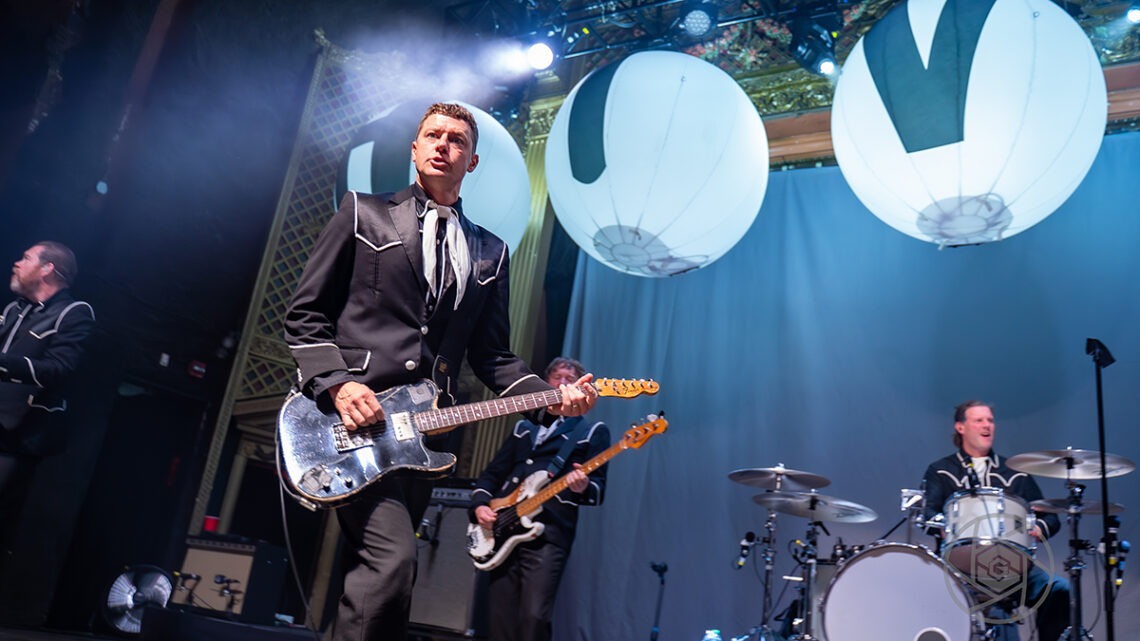
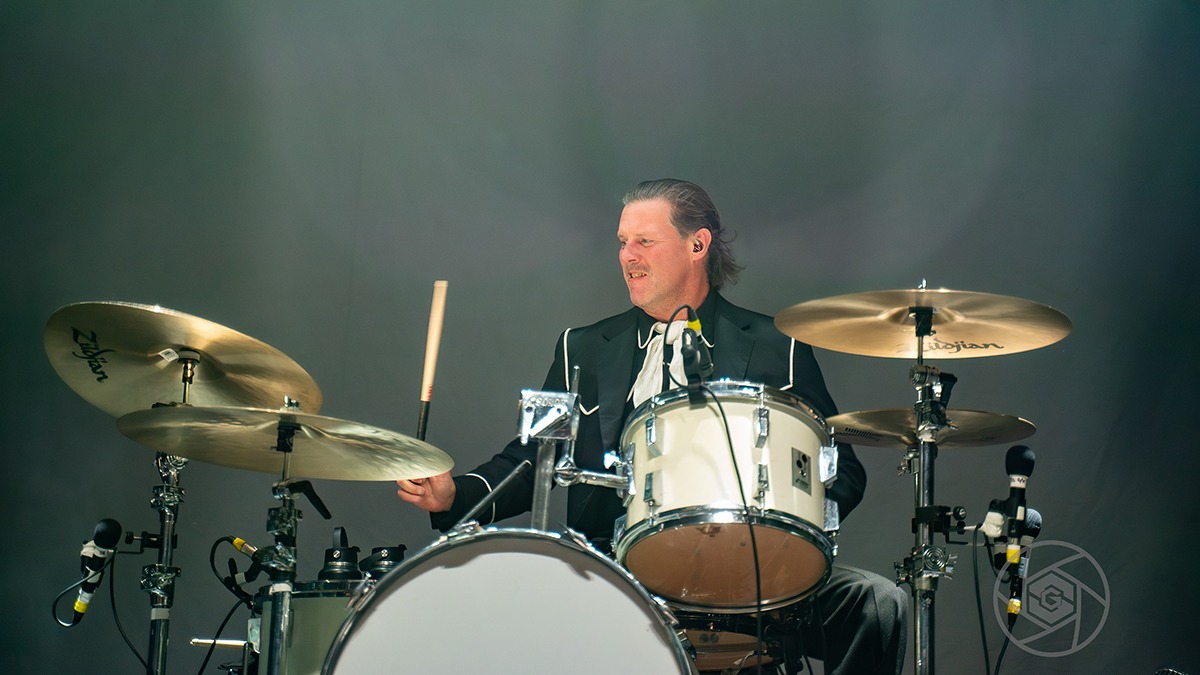
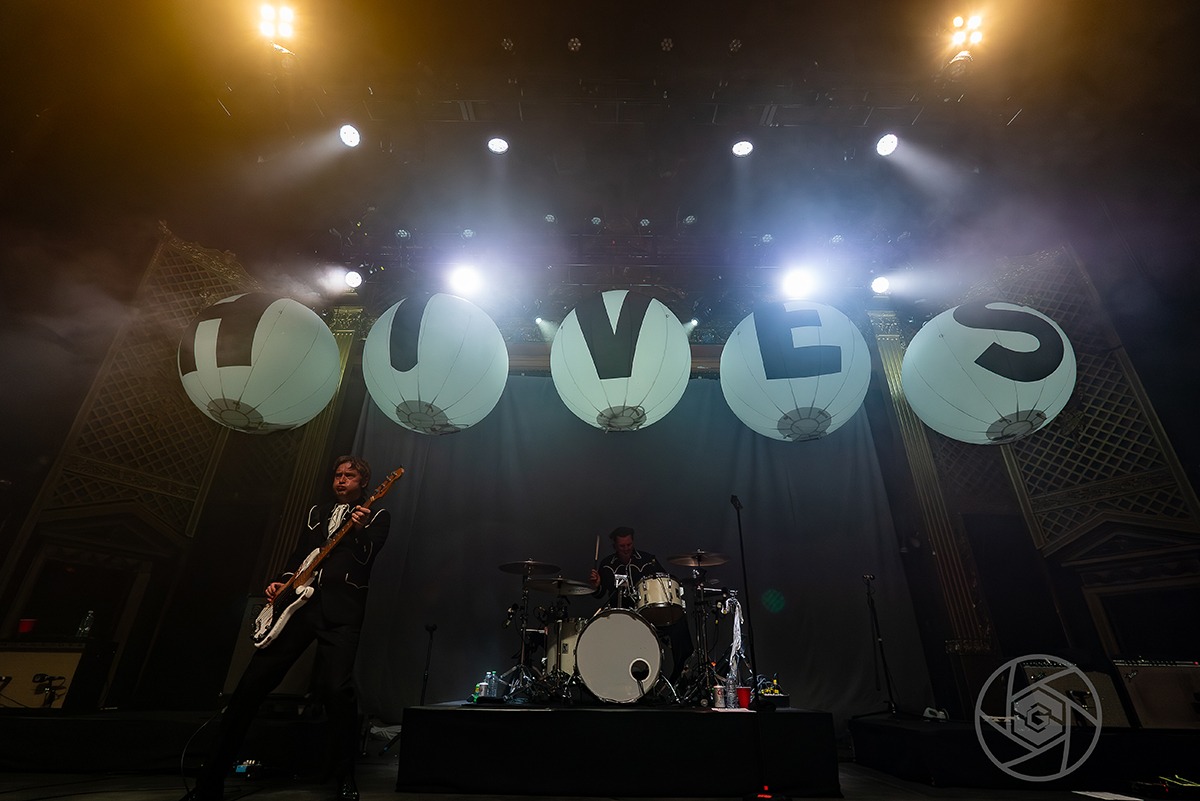
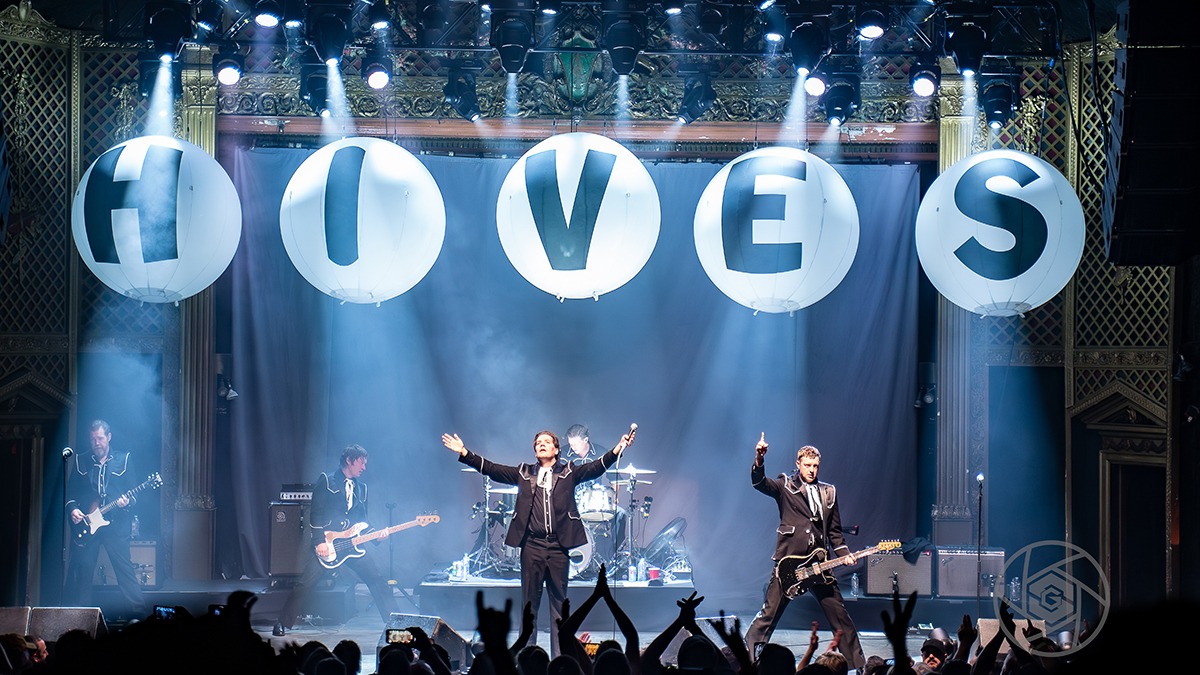
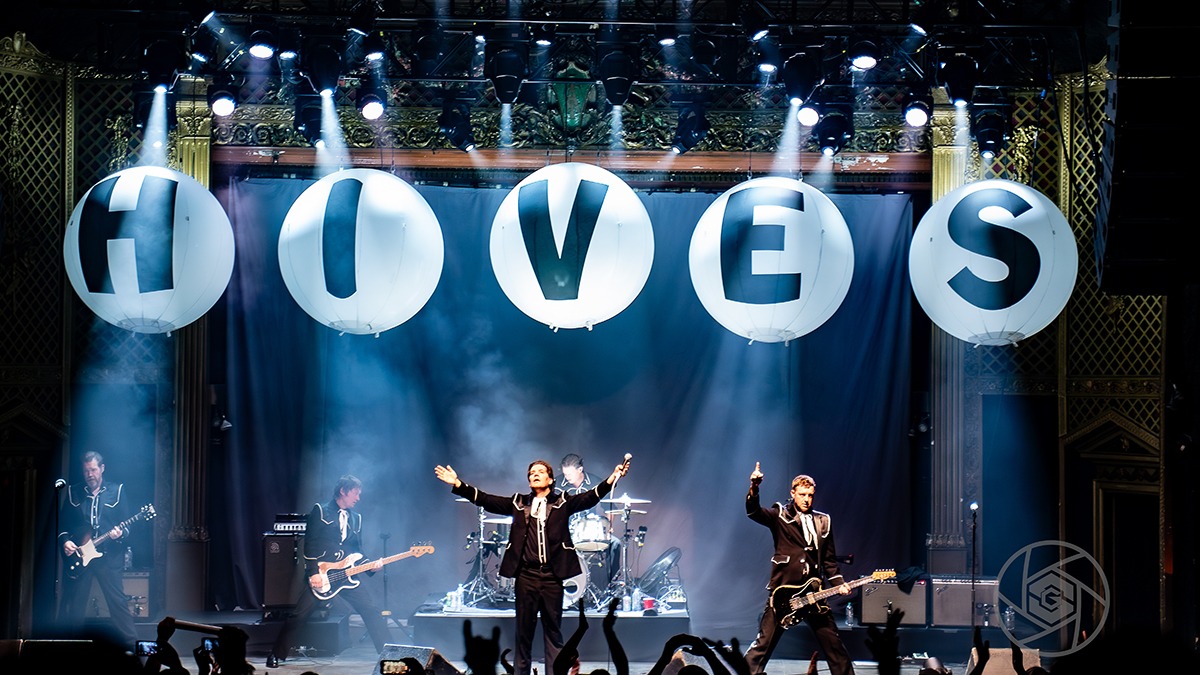
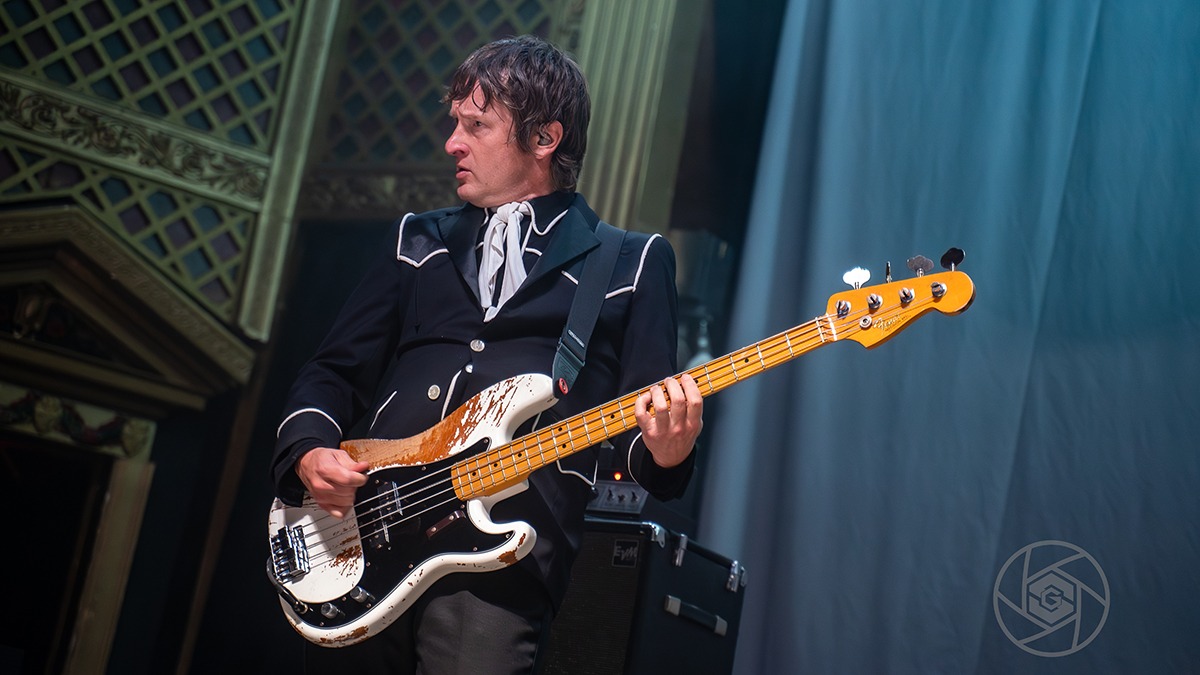
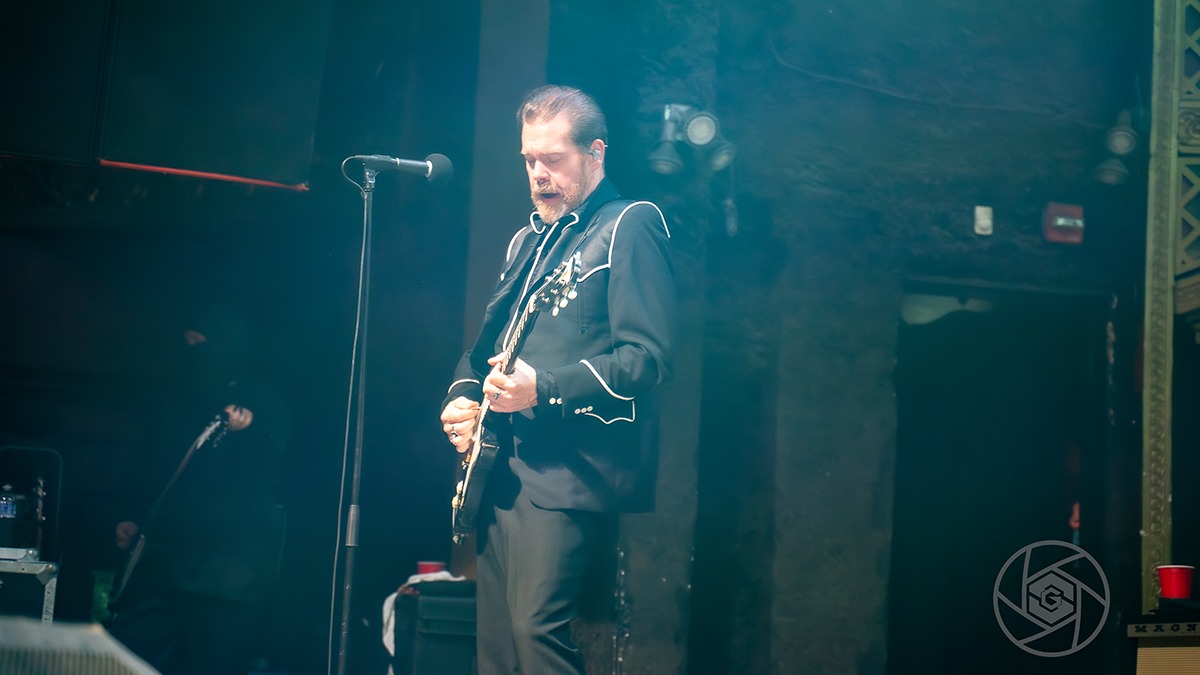
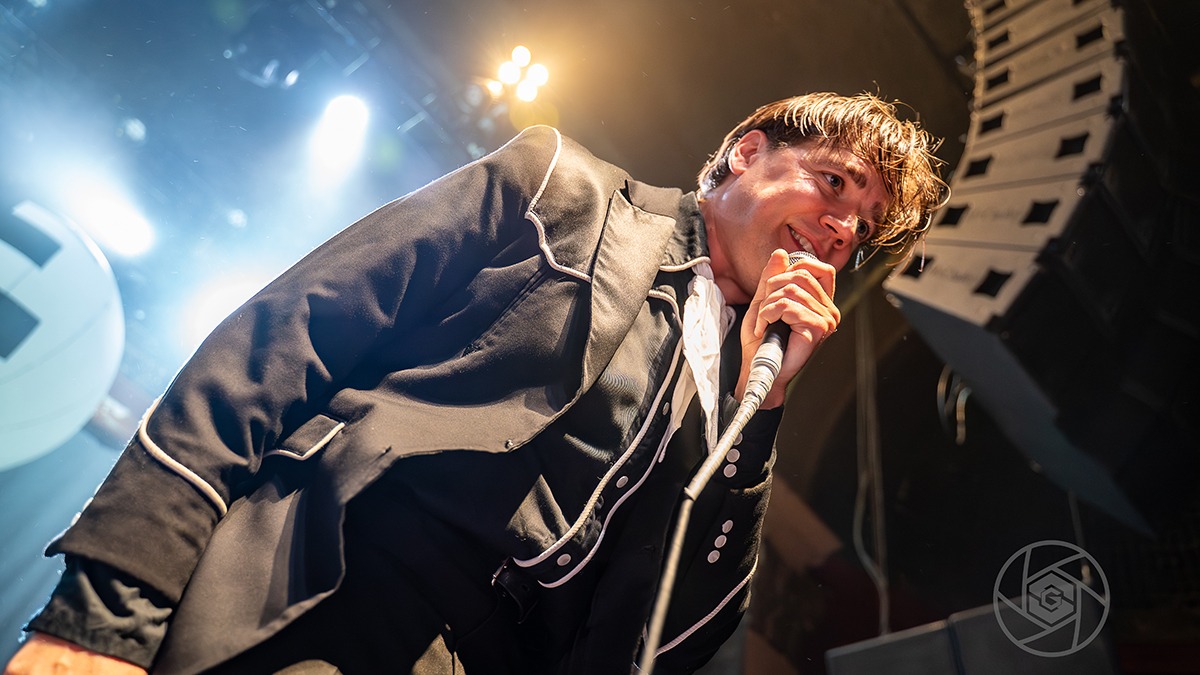
Then, out they stride — Pelle at the center, mic in hand, his grin wide and feral. Guitarists Nicholaus Arson and Vigilante Carlstroem flank him like twin lightning rods, while The Johan and Only looms coolly at the back, bass slung low. Chris Dangerous counts them in, and the whole place explodes with “Bogus Operandi.”
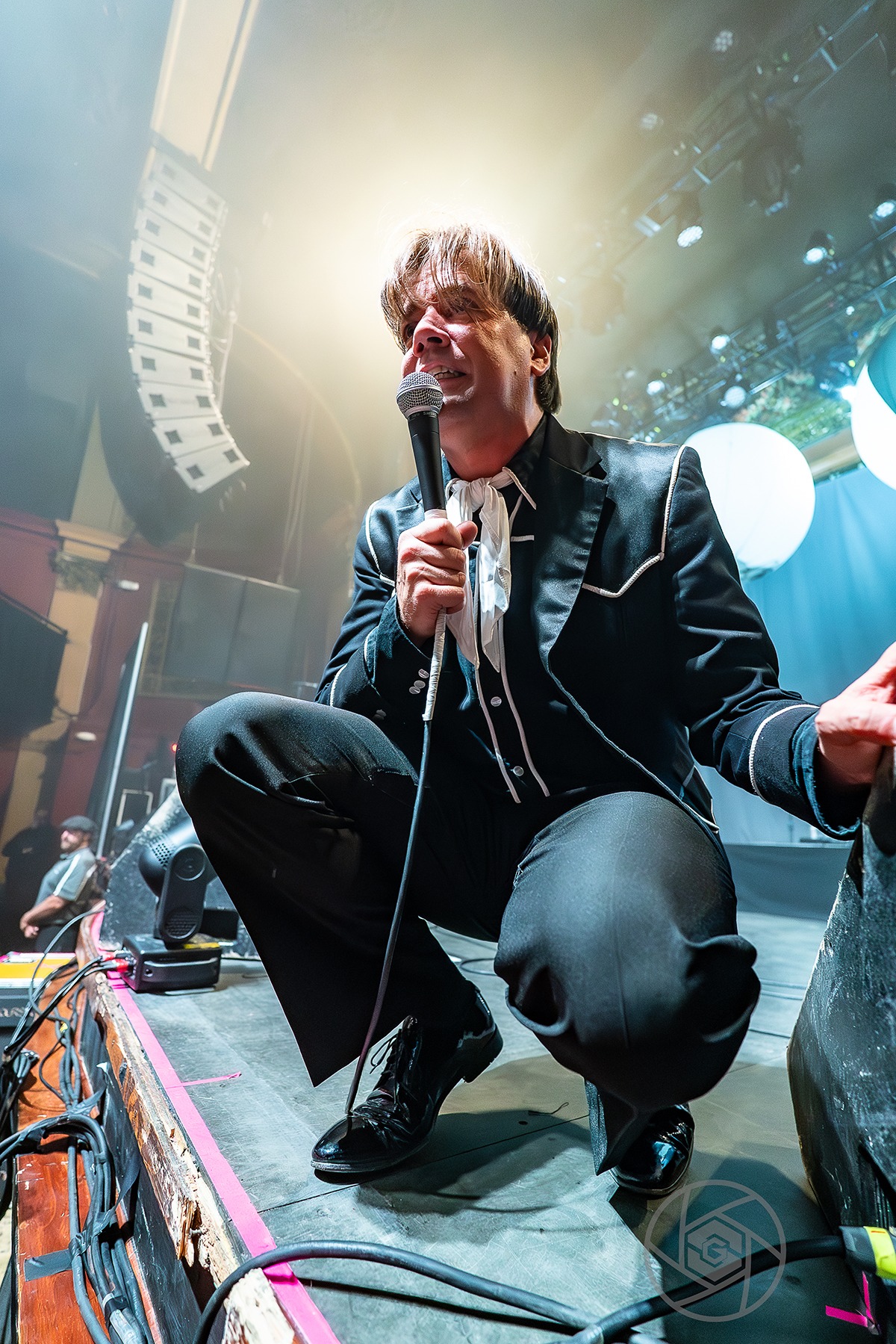
The sound is crisp, vicious, and alive — the kind of analog chaos you can feel in your sternum. Pelle spins, kicks, and bellows, his voice ripping through the mix like a battle cry. The tuxedo makes him look like a villain in a rock opera, and he plays the part with perfect precision.
Howlin’ Pelle, the Conductor of Chaos
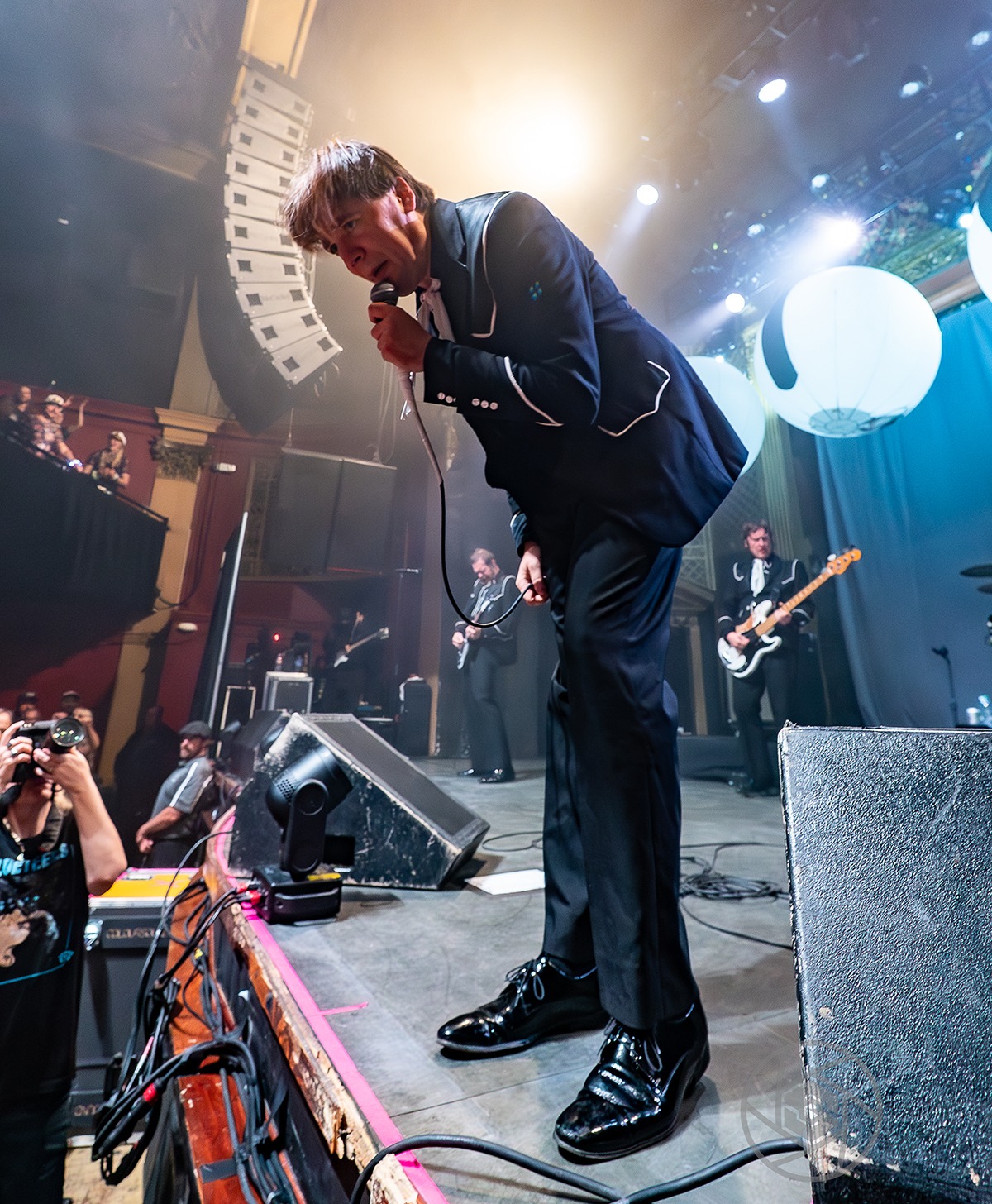
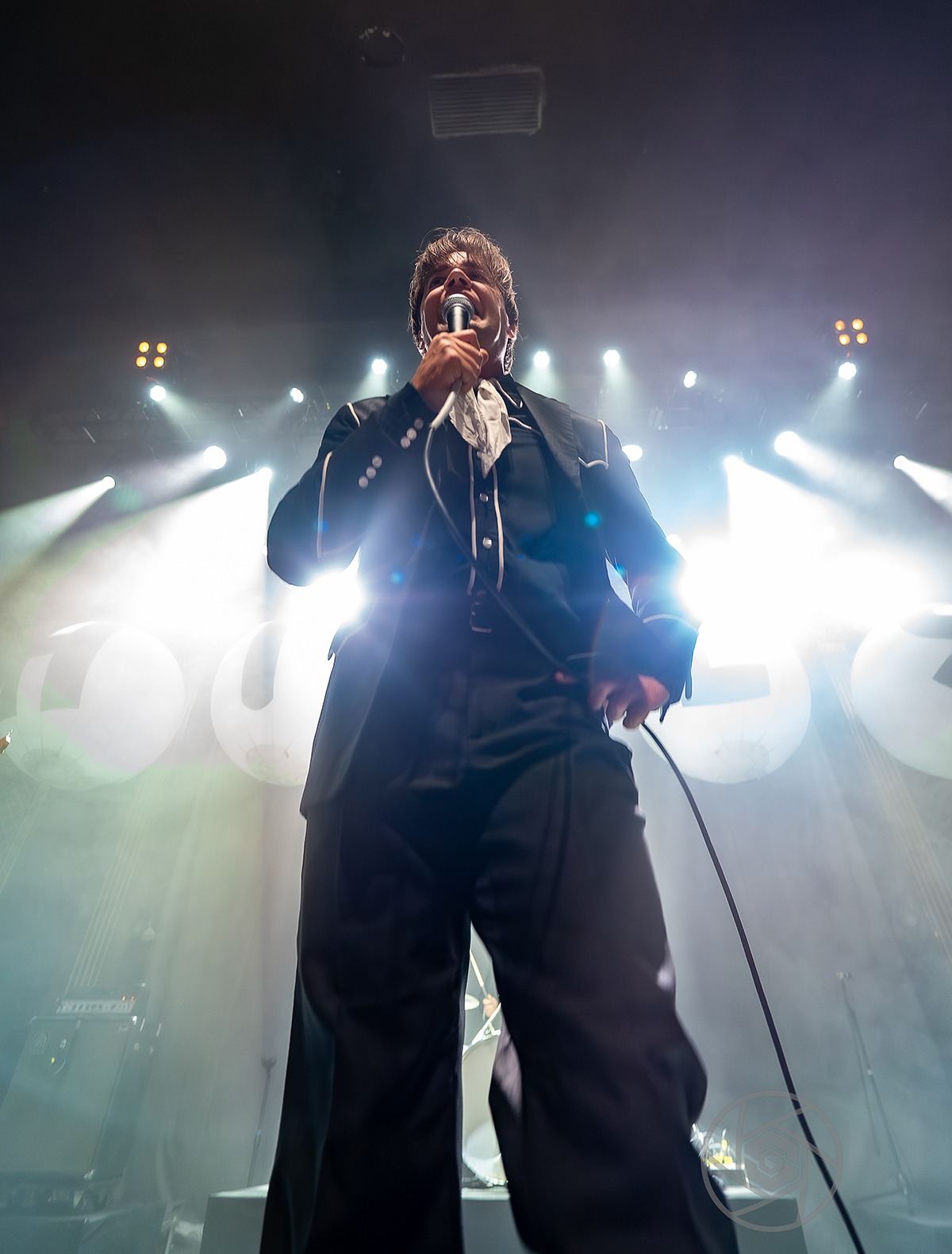
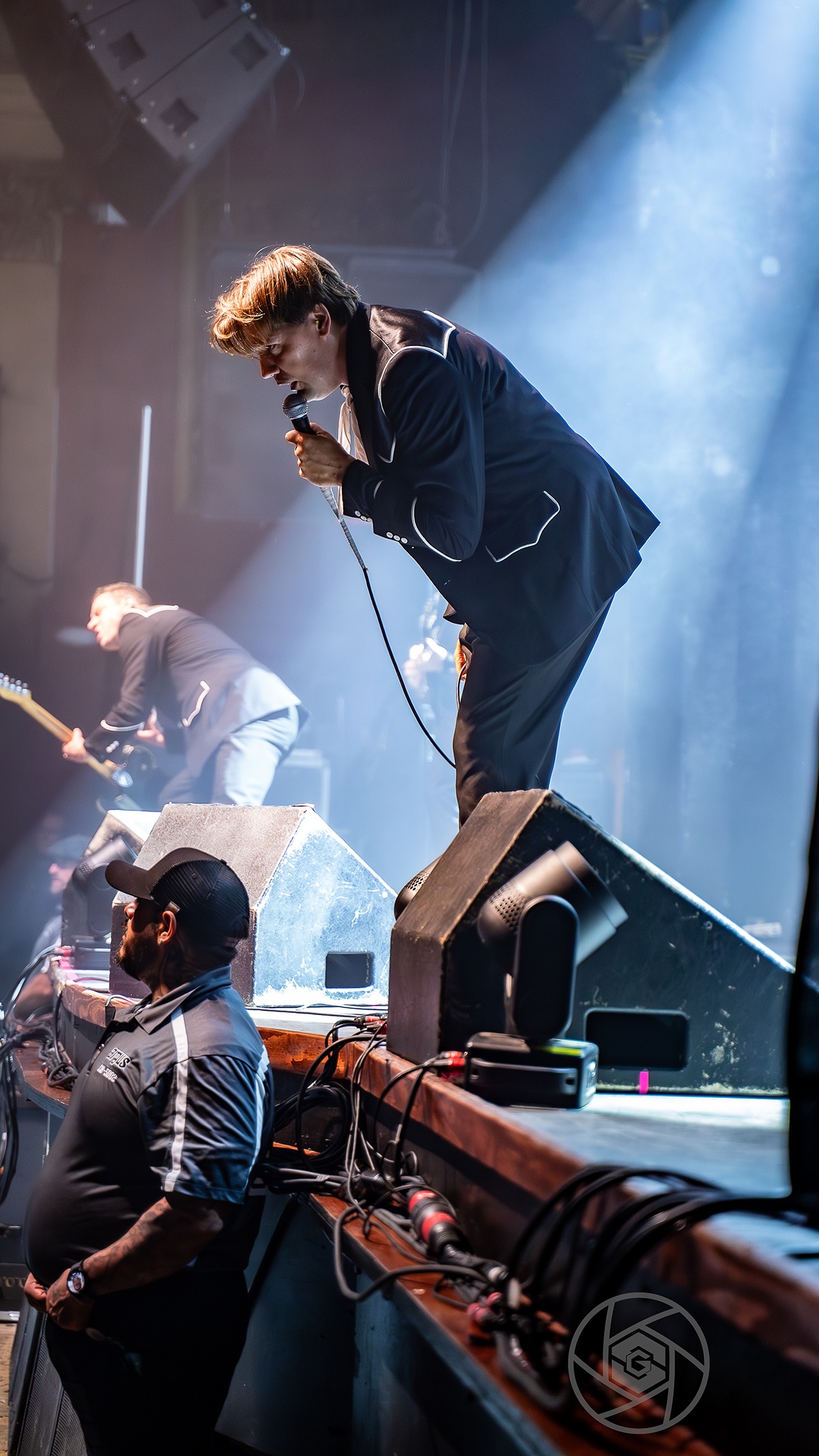
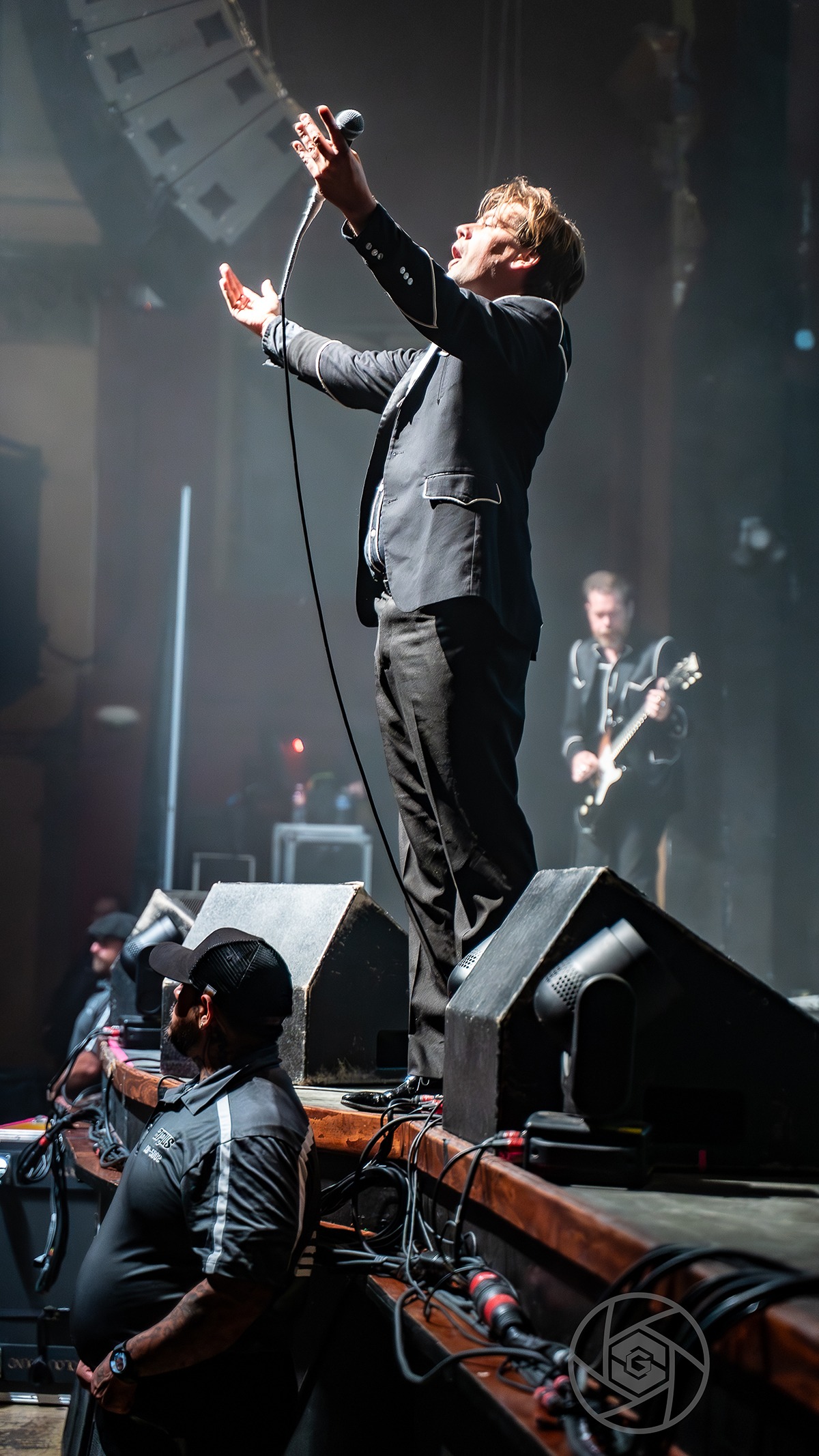
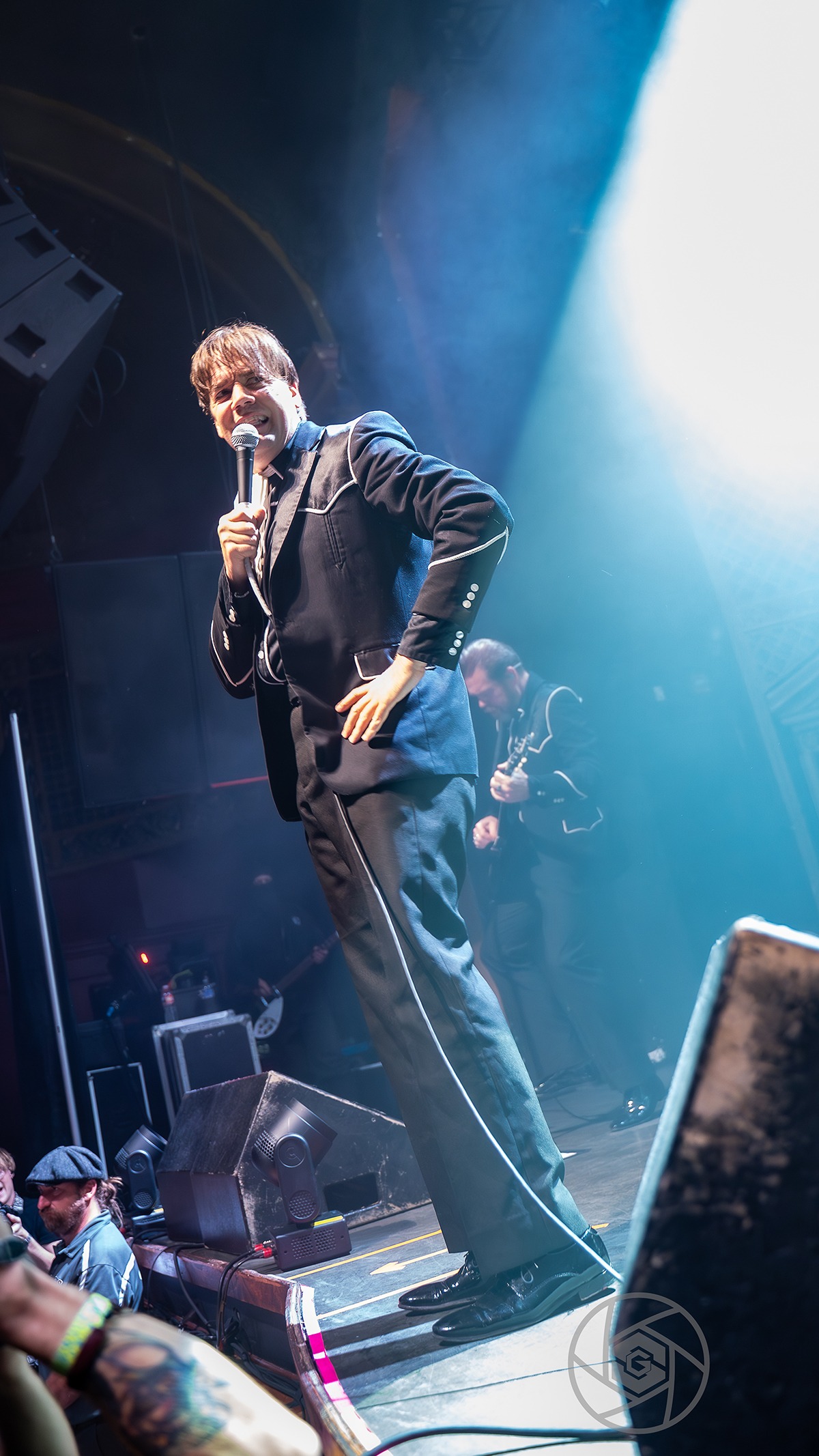
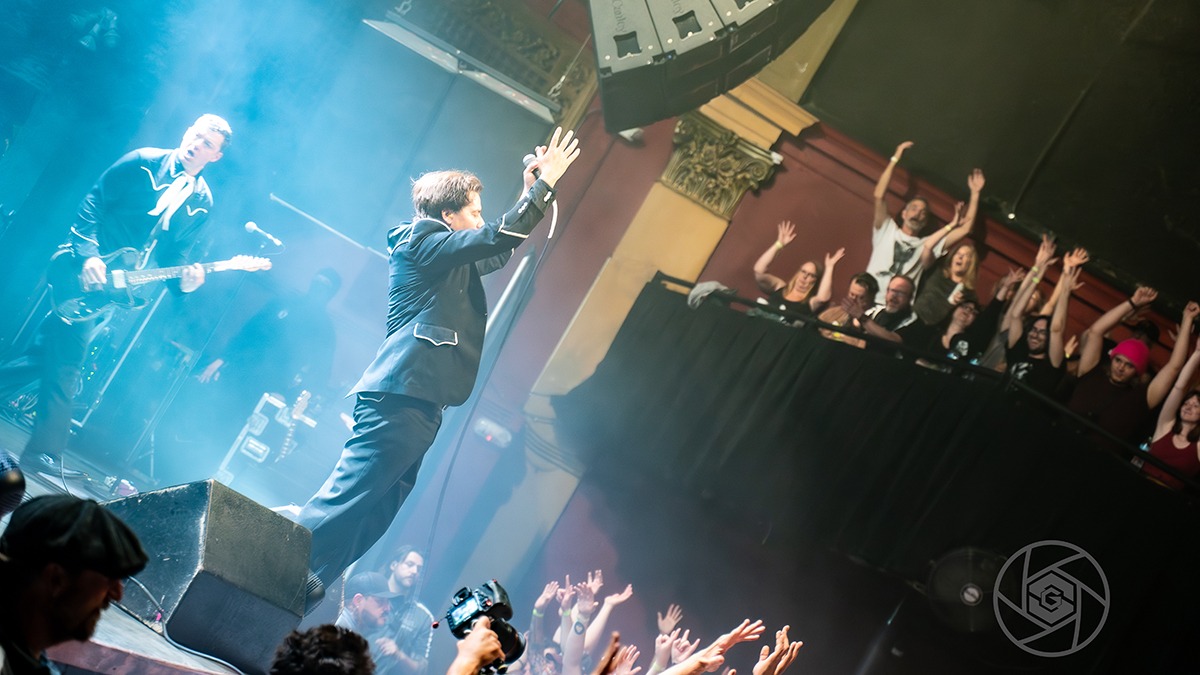
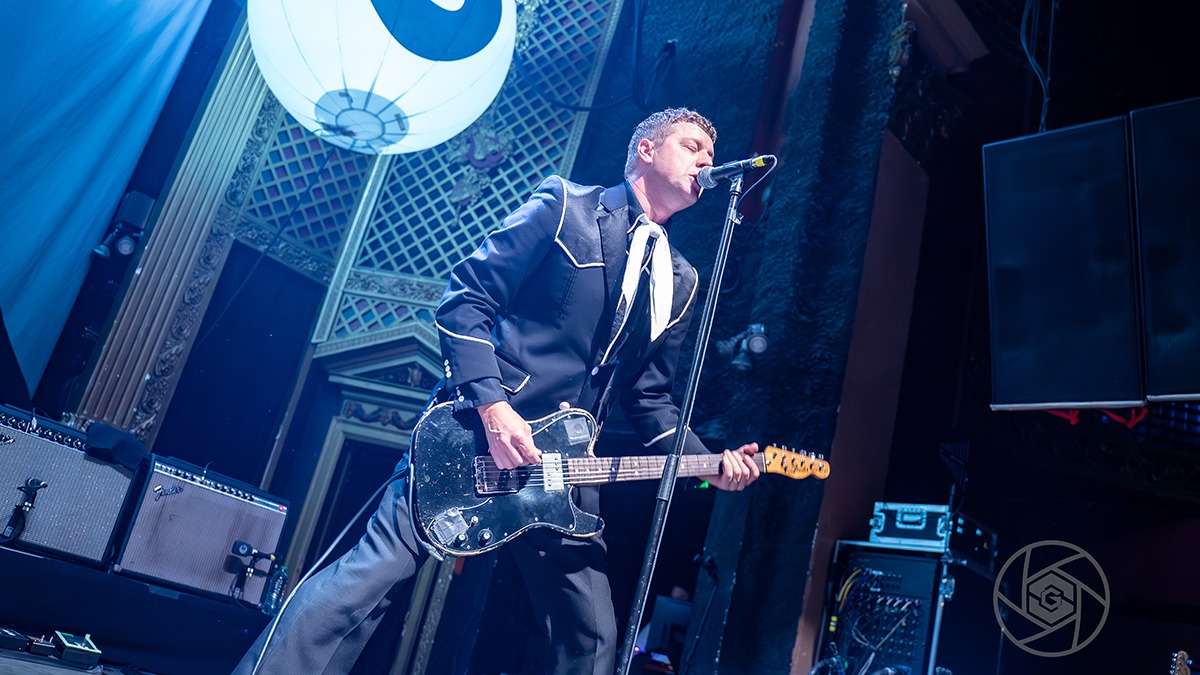
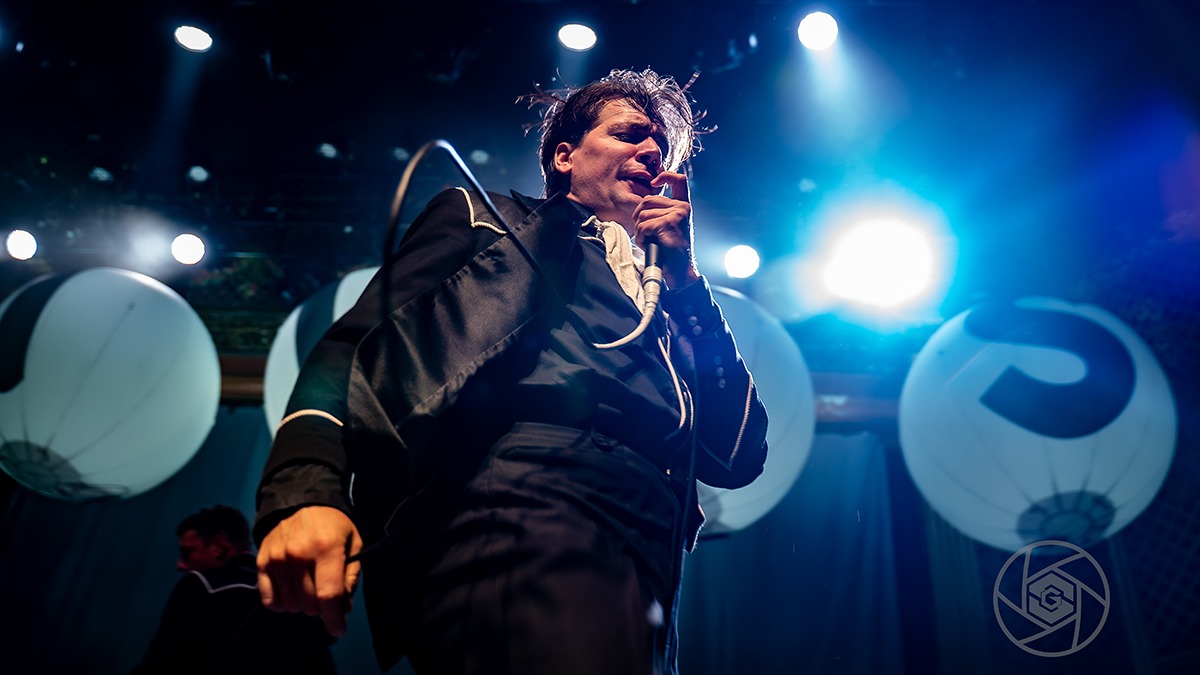
Some frontmen perform. Pelle Almqvist commands. He prowls the stage like a ringmaster, cracking jokes between songs in that rolling Swedish drawl, swinging his mic like a lasso and somehow never missing a catch. He throws himself into the crowd’s energy and multiplies it.
“DENVER!” he shouts midway through the set. “You are lucky tonight — because you are witnessing the greatest band in the history of music!”
The crowd goes wild, half laughing, half believing it.
At one point, he balances on a monitor, kicking his leg high enough to graze a light fixture. He taunts the balcony crowd to match the floor’s volume — and they do, instantly. You can almost feel the air vibrate as he whips the mic cable in perfect loops, catching it like a magician every single time.
It’s rock ’n’ roll showmanship the old way: dangerous, funny, absurd, and absolutely real.
Sound and Fury
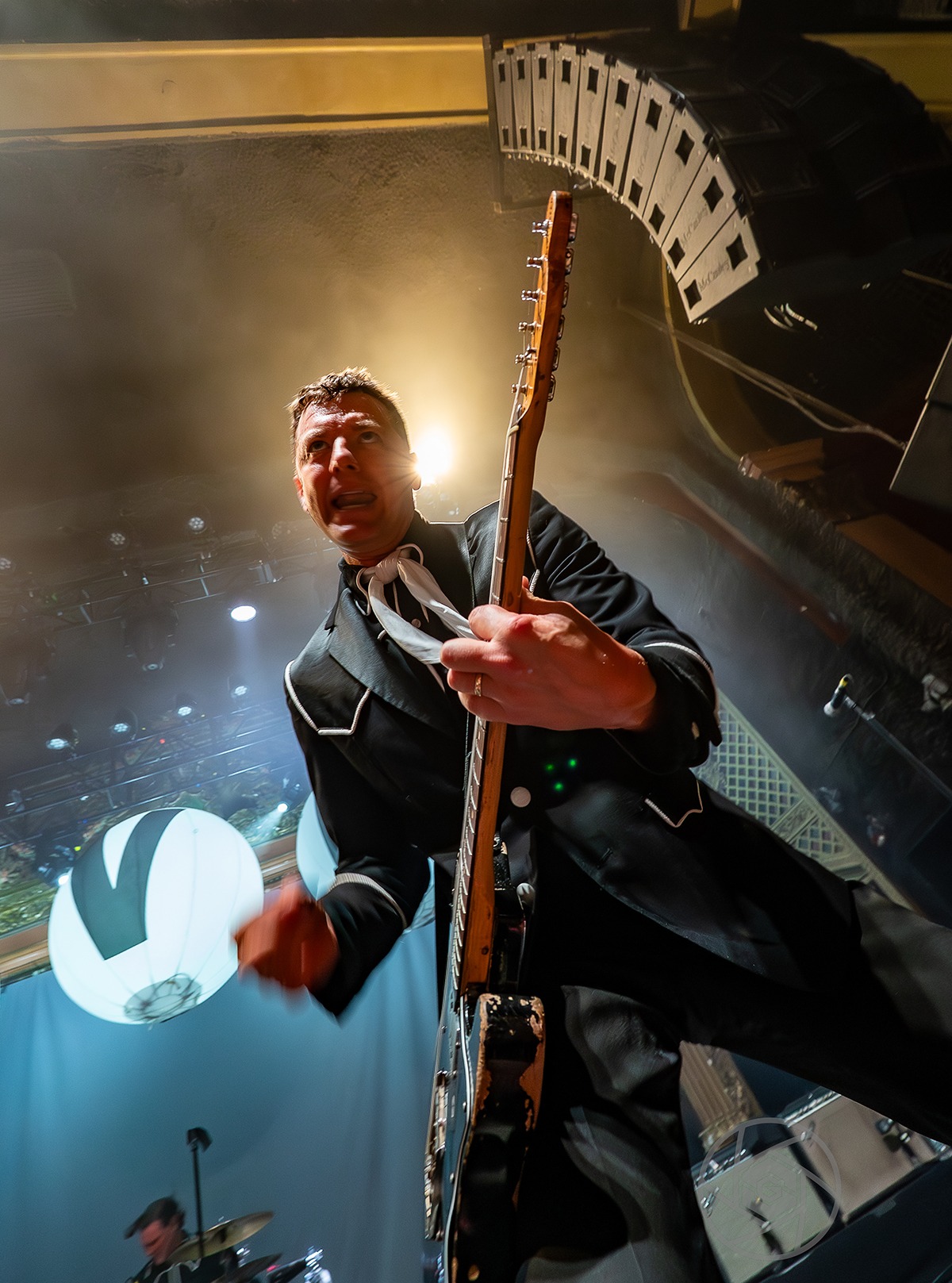
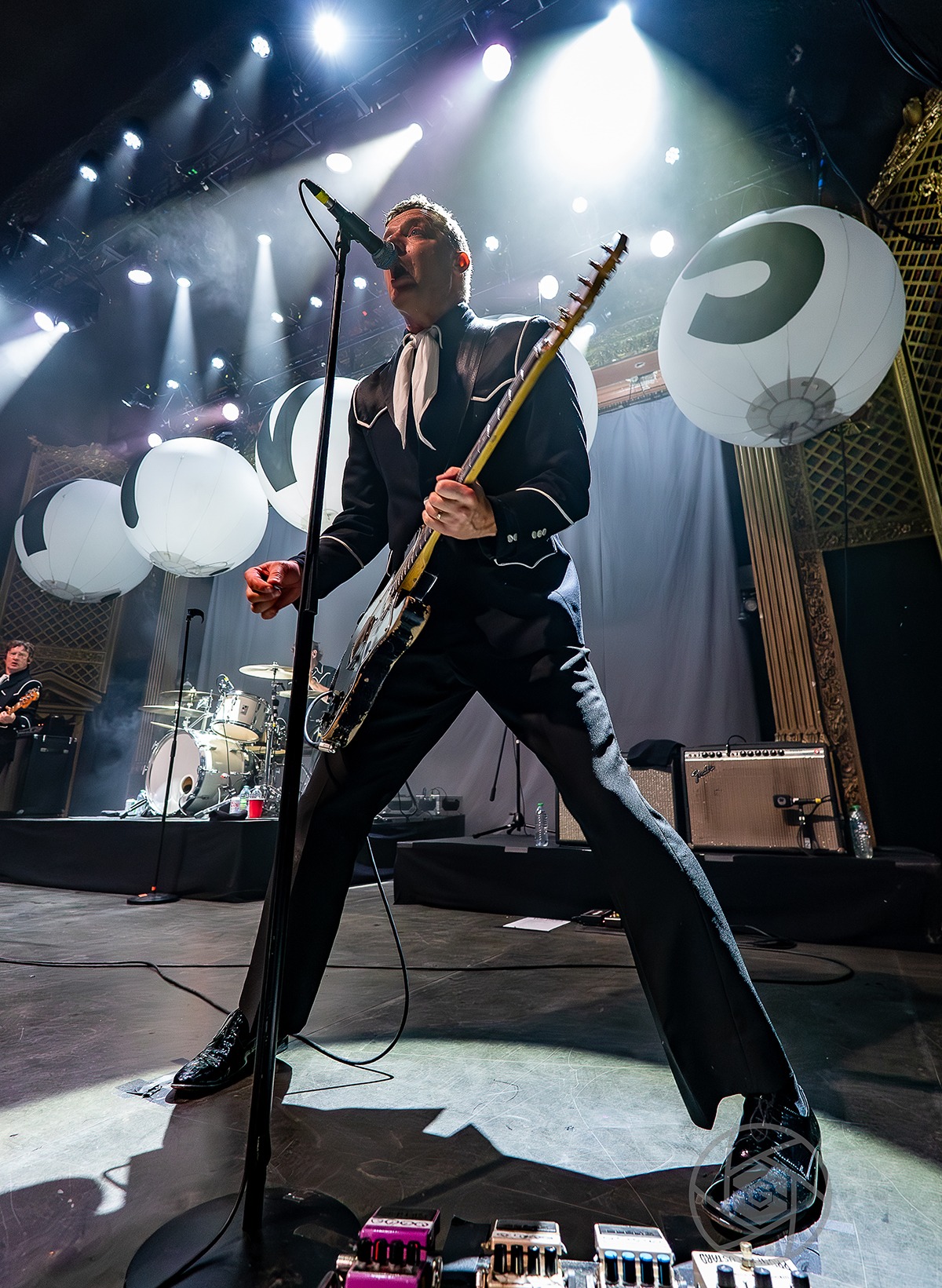
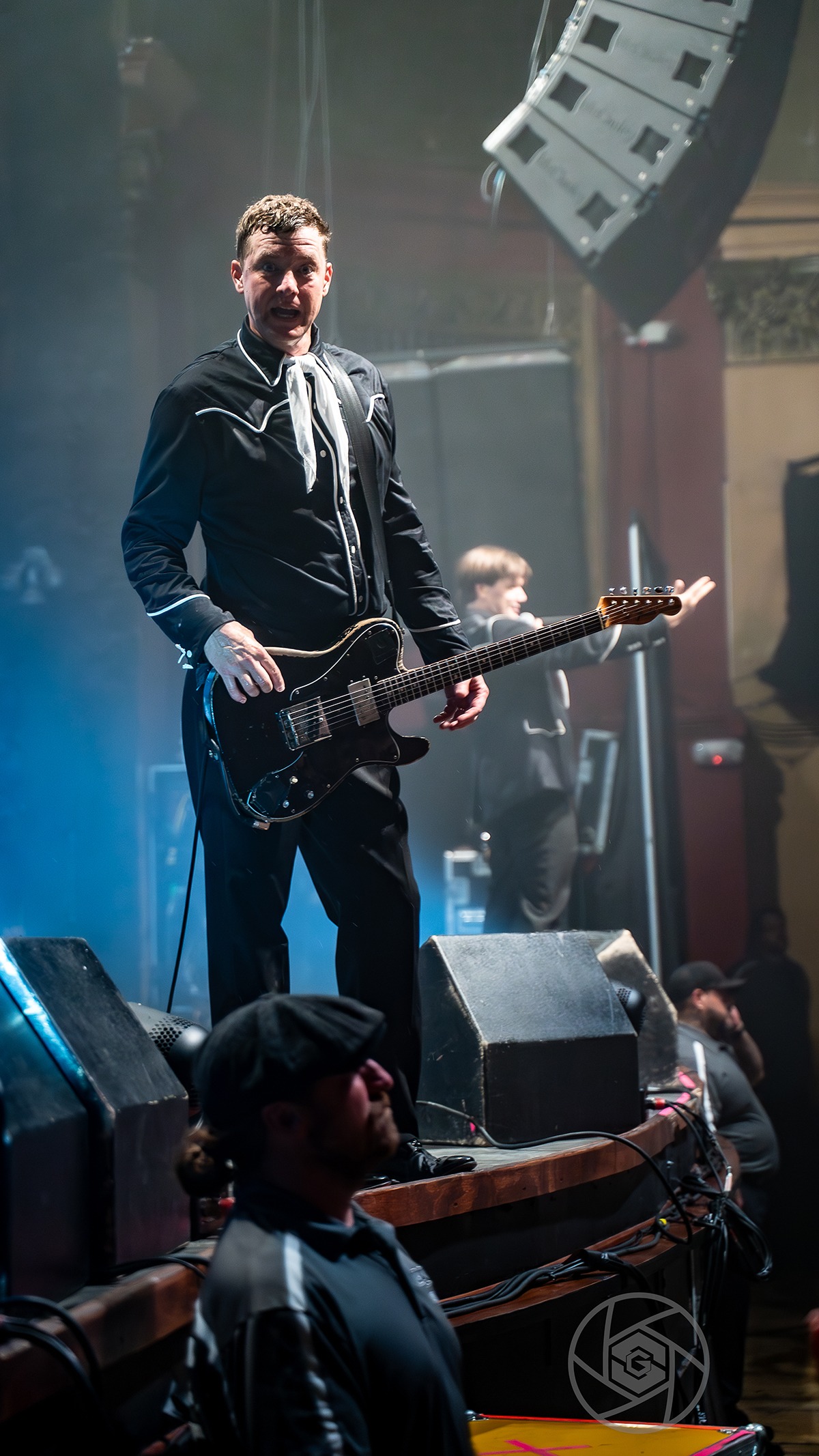
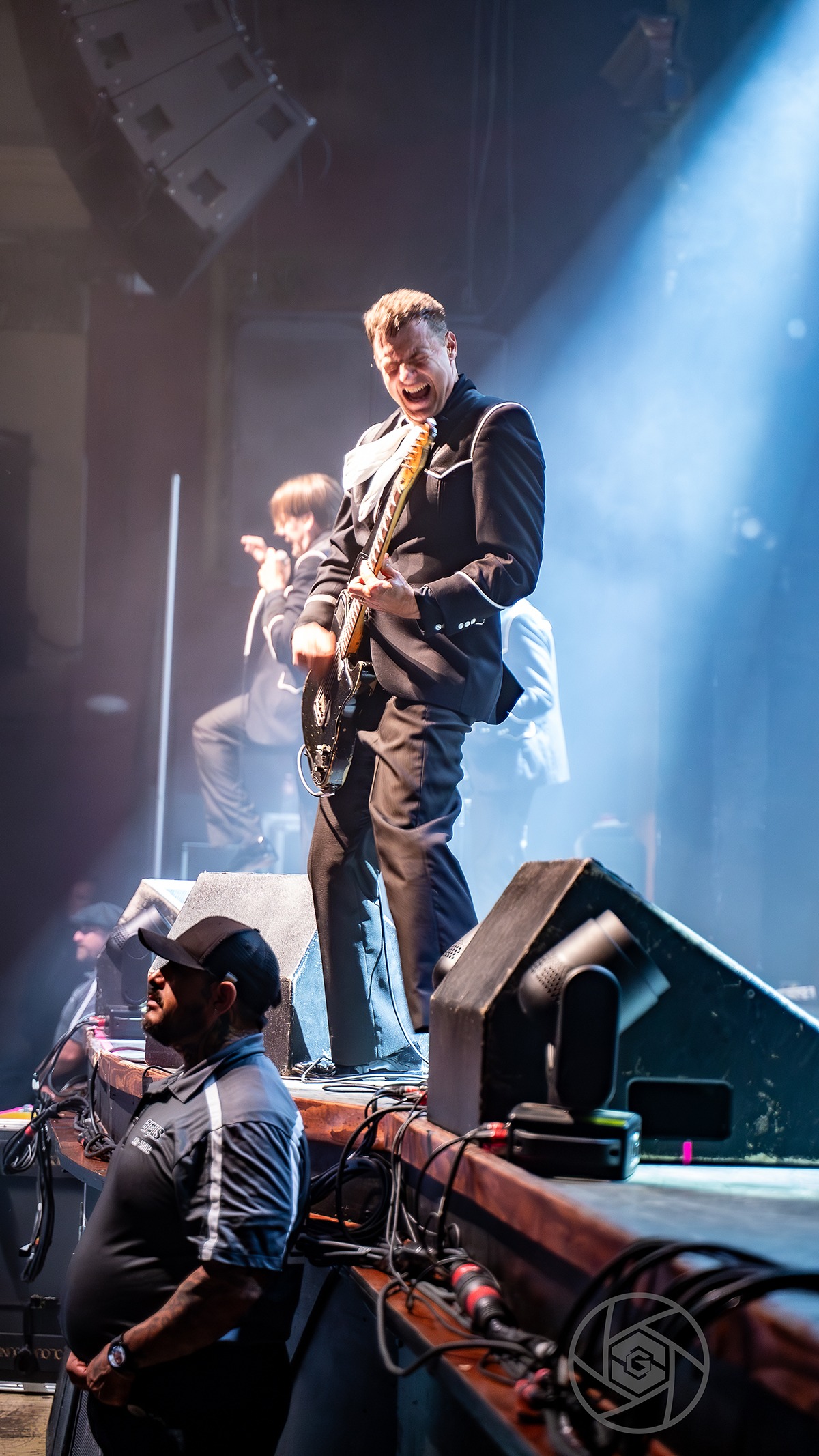
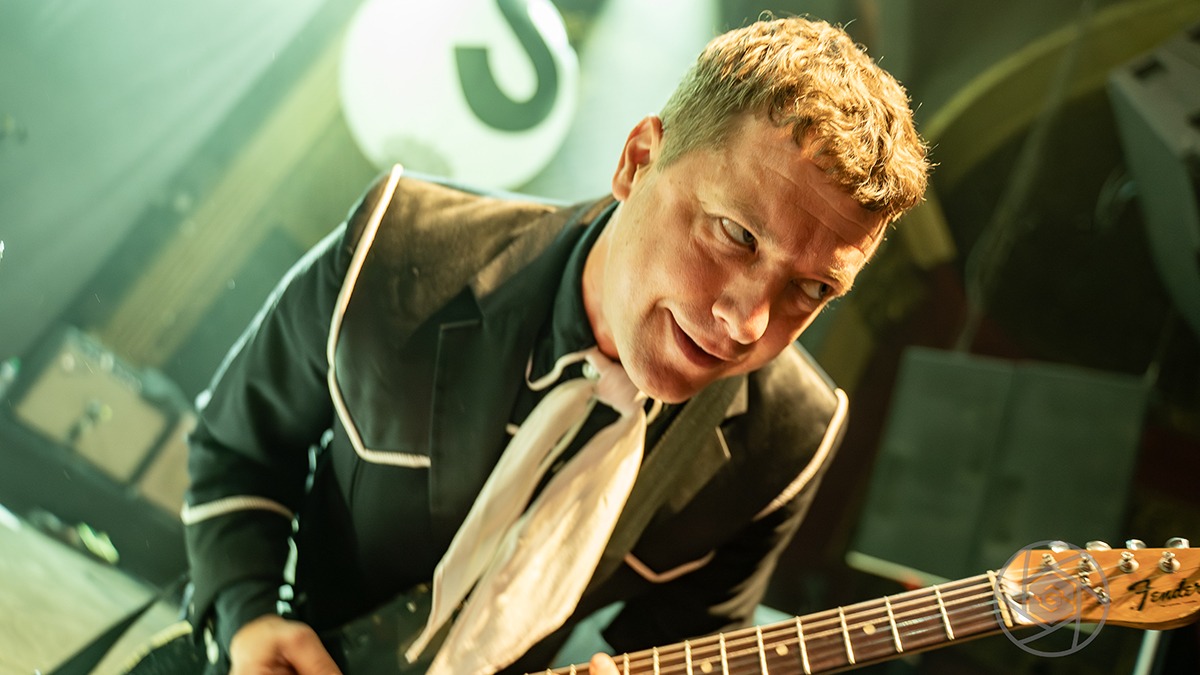
The Hives sound even tighter live than on record — which feels almost unfair. Nicholaus Arson, Pelle’s brother and the band’s wiry mad scientist, throws himself across the stage, attacking his guitar as if it insulted him personally. He and Carlstroem lock into those jagged riffs and frantic chords that made The Hives famous — short, sharp bursts of melody and chaos.
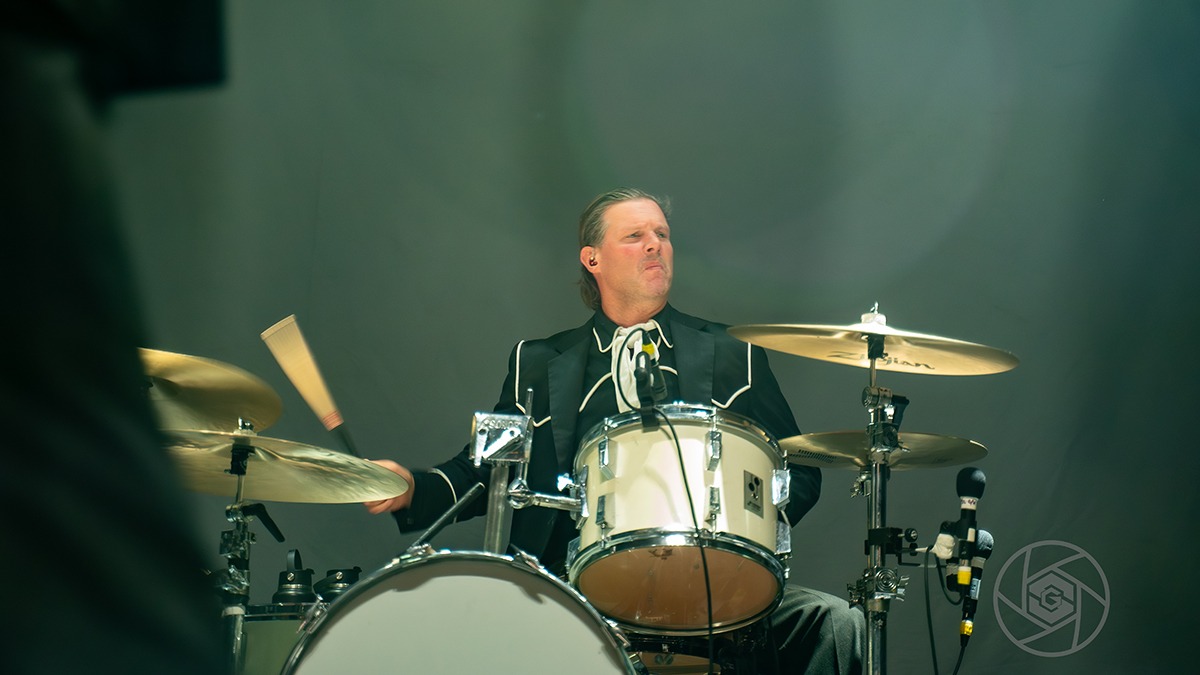
Chris Dangerous hits every snare like he’s breaking glass, and The Johan and Only holds the entire storm together with bass lines that pulse like a heartbeat under the noise.
It’s a sound built on velocity — songs that never overstay their welcome, each one exploding, burning bright, and vanishing in under three minutes.
“Main Offender.”
“Walk Idiot Walk.”
“Go Right Ahead.”
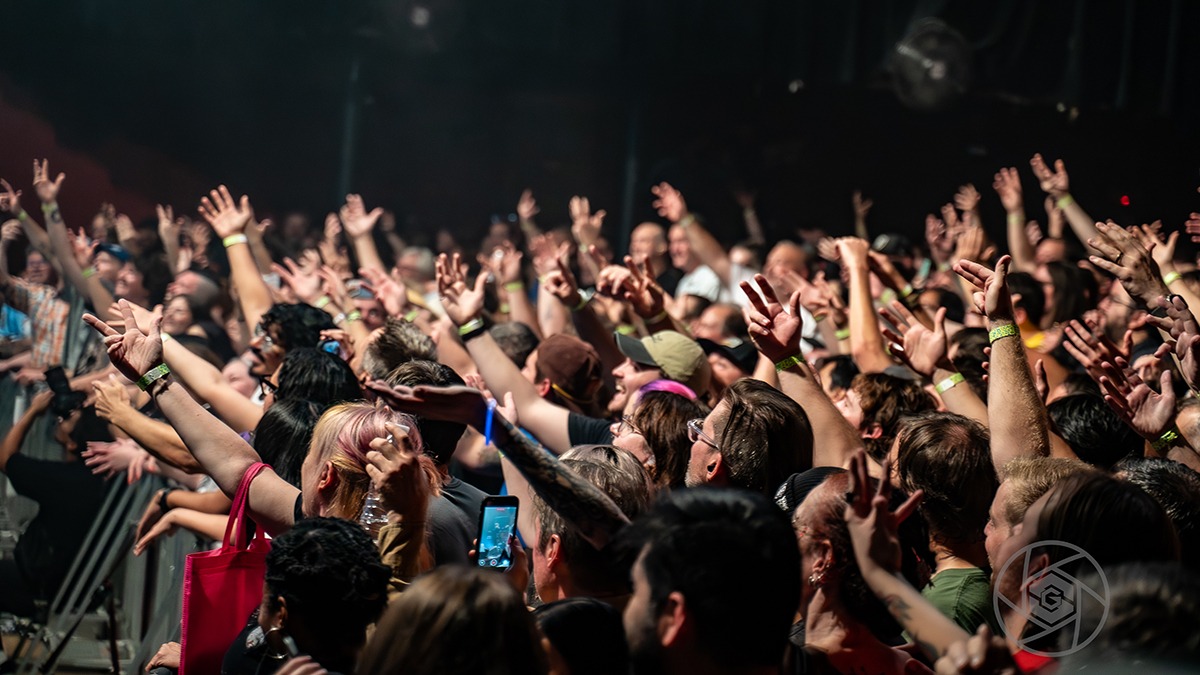
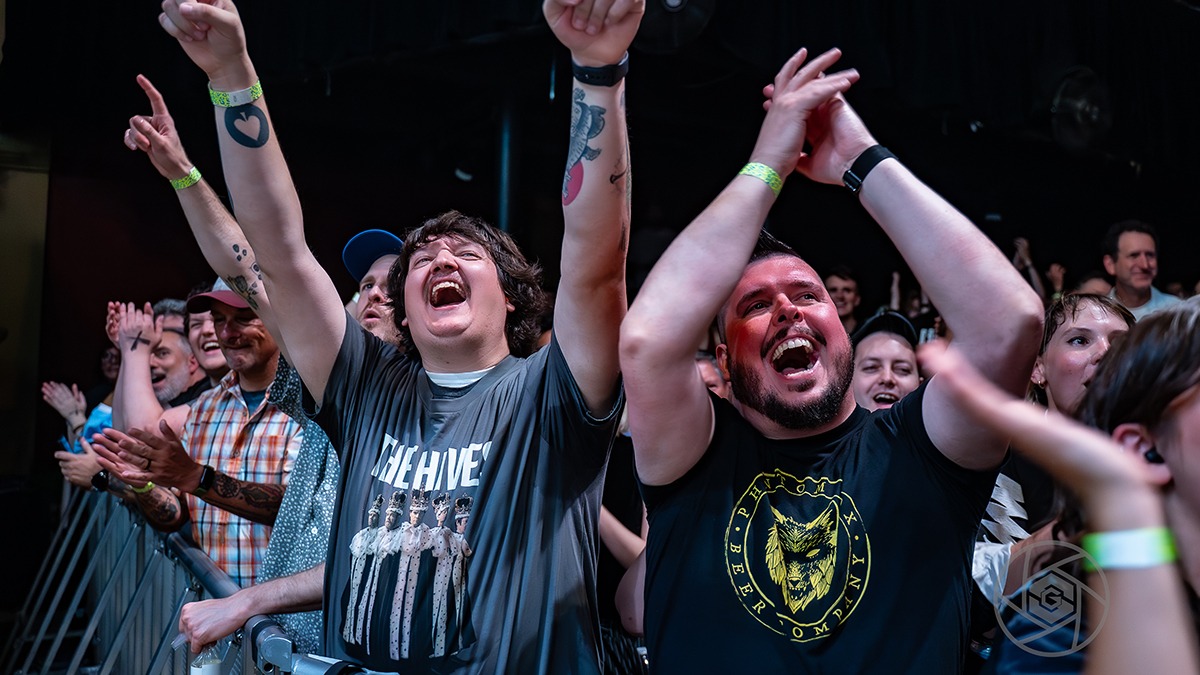
The hits come fast, relentless, each one met with bigger cheers and louder singalongs. The crowd bounces, fists raised, bodies colliding and laughing in the blur.
By the time the unmistakable riff of “Hate to Say I Told You So” kicks in, the entire floor becomes one massive, sweaty wave. Pelle doesn’t even need to sing — the audience takes the chorus, roaring it back with the same grinning defiance the band built its name on.
A Show Built on Precision Chaos
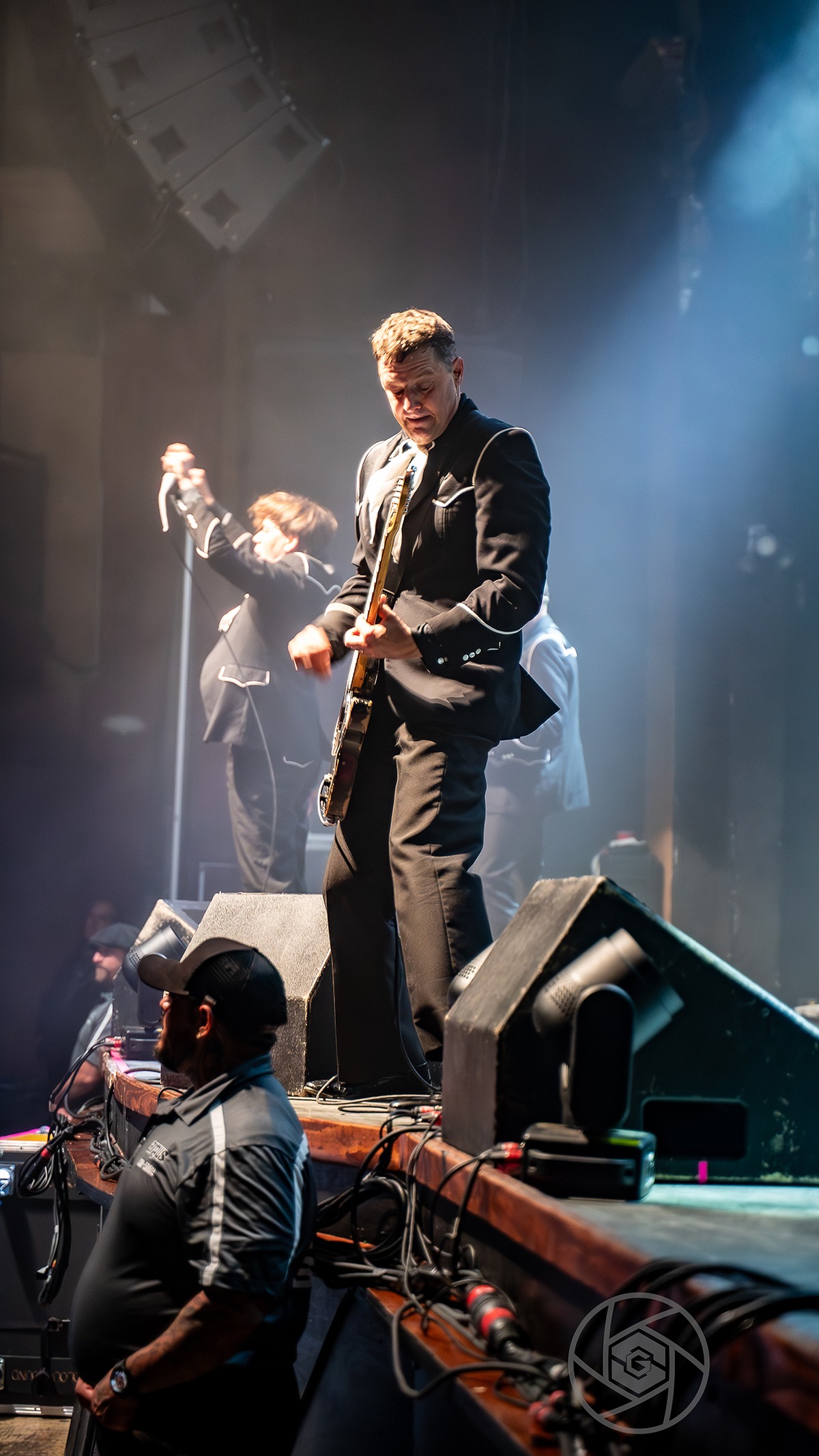
Everything about a Hives show is choreographed chaos — the kind that only works because every member is so locked in. The tuxedos aren’t a gimmick; they’re part of a code, a visual language of discipline and unity. They make the mayhem look intentional, almost elegant.
The lighting stays minimal — white strobes, black shadows — emphasizing the contrast between formality and feral energy. At times, it feels like you’re watching a noir film that learned to play punk rock.
Even the pauses between songs are engineered for tension. Pelle loves to stop and talk — to stretch the silence until the next explosion.
“Ladies and gentlemen,” he drawls, “you are now part of The Hives.”
And when the next riff hits, he’s right. Everyone is shouting, sweating, and swaying in time, completely under his spell.
New Fire, Old Sparks
Their latest material from The Death of Randy Fitzsimmons fits perfectly alongside the classics. “Countdown to Shutdown” hits with a precision that feels mechanical until it suddenly unravels into glorious noise. “Trapdoor Solution” is over almost before you realize it started — a punk bullet with no time to waste.
It’s a reminder that The Hives haven’t just survived three decades in rock — they’ve stayed vital. They still sound like a band that could kick open a club door and demand the crowd surrender.
Almqvist even jokes about it mid-set:
“Yes, we are still alive,” he smirks. “And we are better than before — because now, we know exactly how to kill you with rock and roll.”
A Perfect Ending: Tick, Tick, Boom
After an hour of pure adrenaline, they leave the stage briefly — just long enough for the audience to start chanting their name. The room feels like it might actually explode if they don’t come back soon.
And then — BOOM.
They’re back, launching into “Come On!” with no warning. Pelle is everywhere at once, Arson’s guitar slicing through the noise like an alarm siren.
Then comes the moment everyone’s been waiting for: “Tick Tick Boom.”
That unmistakable rhythm detonates like TNT, and the entire Ogden erupts. People are jumping so hard the balcony rails shake; the floor is a sea of motion and sweat. Pelle climbs the barricade, balancing with one foot as he leans into the crowd, letting them scream the final chorus.
When the last chord hits, the lights flash blinding white, and for a moment, time stops — just the ringing in your ears and the heartbeat of hundreds of strangers who all know they’ve witnessed something special.
The Afterglow
As the house lights rise and the tuxedoed Swedes wave their last dramatic bows, the audience spills out onto Colfax in stunned silence that slowly turns into laughter and cheers. Everyone’s drenched, smiling, and dazed — that post-show glow that only the best live bands can summon.
The Hives didn’t just play a concert. They detonated one.
Their performance at the Ogden was a reminder of why they’re still one of the best live acts on the planet: no gimmicks, no autopilot nostalgia — just pure, joyful, over-the-top rock and roll. In an age of backing tracks and carefully curated perfection, The Hives are a glorious mess of precision and danger.
They’ve been wearing tuxedos since the early ’90s, but the fire underneath hasn’t dimmed a bit. If anything, they’ve learned how to weaponize it — how to take that garage-rock grit and turn it into theater, how to make chaos feel classy.
As Pelle shouted before the final curtain:
“DENVER — you have been adequate! We have been The Hives!”
And the crowd — hoarse, grinning, and still catching their breath — couldn’t have agreed more.
Because when The Hives come to town, “adequate” feels like the wildest understatement in the world.